

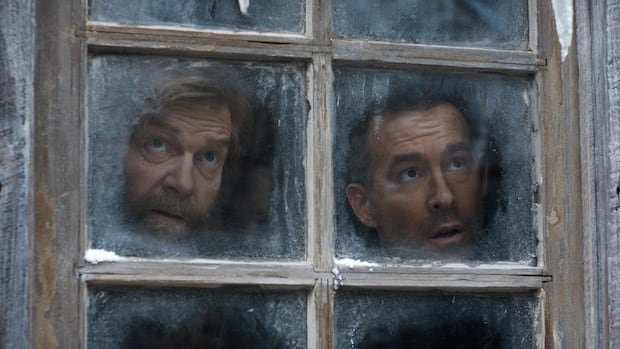

In a surprising reflection on human nature, the film “Mayday” delves into the theme of recognizing the humanity in others, even amidst political tensions. Set in the 1980s, the storyline follows an ex-KGB agent, Nikolai, played by Kenneth Branagh, who unexpectedly shows compassion towards a U.S. navy pilot, Troy, portrayed by Ryan Reynolds. Despite initial skepticism, Nikolai’s genuine intentions to protect and aid Troy challenge the stereotype of Russian individuals as solely antagonistic figures.
The narrative unfolds as an action-packed comedy, with Branagh embodying a charismatic yet complex character, while Reynolds portrays a witty foil balancing humor and chaos. The film cleverly navigates the dynamics between the two protagonists, offering a blend of humor and action that keeps the audience engaged.
Delving deeper, “Mayday” subtly addresses the inherent biases and stereotypes prevalent during the Cold War era, where demonizing the “other” was commonplace. Through the evolving relationship between Nikolai and Troy, the film prompts viewers to question preconceived notions about nationalities and the complexity of human nature.
Directed by Jonathan Goldstein and John Francis Daley, “Mayday” strikes a balance between entertainment and introspection, presenting a nuanced portrayal of characters caught in the midst of political turmoil. While it may not revolutionize the genre, the film succeeds in sparking contemplation on the blurred lines between heroism and villainy, ultimately challenging viewers to reconsider their perceptions of adversaries.
With its blend of humor, action, and underlying commentary, “Mayday” emerges as a mainstream film that subtly challenges traditional narratives of the Cold War era. In a time when political tensions continue to shape global relations, the film serves as a reminder of the shared humanity that transcends borders and ideologies.