

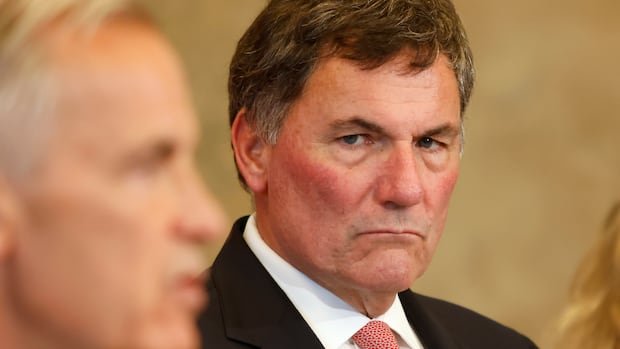

Canada’s Minister of Trade, Dominic LeBlanc, expressed satisfaction with the United States retracting its stances on French language and culture following remarks made by U.S. Trade Representative Jamieson Greer to CBC News regarding Canada’s streaming regulations not being a decisive issue for the U.S. side.
LeBlanc conveyed in a statement that Canada appreciates the U.S. withdrawing its positions on discoverability and labeling, ensuring that actions to support French language and Canadian culture will not face future U.S. trade repercussions. He anticipates further constructive clarifications from the U.S. to pave the way for a trade agreement that upholds Canadian sovereignty.
Prime Minister Mark Carney instructed negotiators to walk away from discussions last week after the Trump administration raised concerns about culture, automotive industry, and sovereignty. Carney highlighted that the U.S. had objections to Canada’s subsidies for French culture, the online presence of French-language media, and the mandatory bilingual labeling of products in Canada.
In an interview with CBC News, U.S. Trade Representative Jamieson Greer adjusted the U.S. stance on culture and language. Greer emphasized the importance of the French language in Canada and acknowledged its sensitivity. He clarified that while the U.S. prioritizes capitalism, the issue of French content discoverability on streaming platforms was not a deal-breaker.
Following the breakdown of negotiations, the U.S. imposed 50% tariffs on numerous Canadian goods worth approximately $27 billion, prompting Canada to announce counter-tariffs on over 700 U.S. imports. Although the U.S.’ revised position on language and culture signals progress towards a potential deal, talks have stalled with no immediate plans for resuming negotiations.
U.S. Commerce Secretary Howard Lutnick accused Carney of politicizing the situation by exiting trade talks, refuting claims that language laws were discussed. Lutnick criticized Carney’s actions as a tactic to sway the upcoming Quebec election against the Parti Québécois. The U.S. administration maintained that the alleged reasons for the breakdown in talks were unfounded.
PQ Leader Paul St-Pierre Plamondon raised concerns about the accuracy of statements made during negotiations, emphasizing the significance of the French language in Quebec. Coalition Avénir Québec Leader Christine Fréchette supported Carney’s narrative, citing transparency in federal communications regarding trade negotiations.
The developments reflect a complex interplay of trade dynamics between Canada and the U.S., with unresolved issues hindering progress towards a mutually beneficial agreement.