

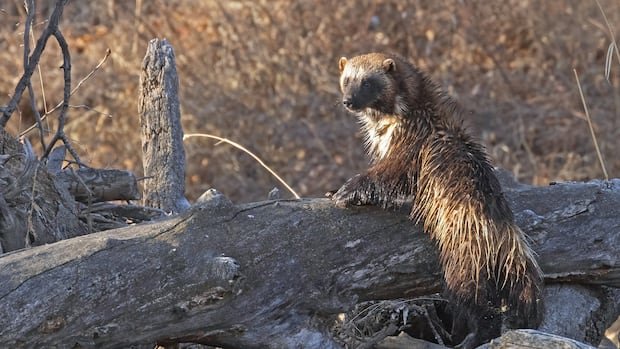

A recent study reveals that the presence of skiers, snowshoers, and snowmobilers in the backcountry is impacting wolverines more significantly than previously believed. Research conducted in the Columbia and Rocky Mountain ranges, including Banff National Park, indicates that regions with higher recreational activities and road networks have fewer wolverines residing in those areas.
The study, led by Mirjam Barrueto and her team at the University of Calgary in collaboration with Parks Canada, covered an extensive area of 80,000 square kilometers known to offer favorable habitat for wolverines. While initial estimations suggested the potential support for around 500 to 600 wolverines in the region, the study findings revealed that only approximately 300 individuals currently inhabit the area.
Notably, the research highlighted that winter recreational activities have a more pronounced impact compared to summer pursuits. Barrueto emphasized that winter sports, such as skiing and snowmobiling, have a larger footprint due to the snow cover, allowing greater mobility for enthusiasts throughout the backcountry.
Female wolverines, particularly vulnerable during the winter months when nurturing their offspring, may be disturbed by human activities, leading them to abandon food storage areas and expend energy avoiding human interactions instead of caring for their kits. Barrueto suggests a potential solution of identifying critical wolverine habitats and implementing temporary restrictions on human access during these sensitive periods.
The study also observed a decline in female wolverine populations with an increase in the number of roads in the area, while male populations remained unaffected. Wildlife ecologist Jason Fisher from the University of Victoria, not involved in the study, expressed concern over the findings, emphasizing the importance of protected areas like the Rocky Mountains in conserving wolverine populations.
Further research revealed that even minimal human activity, such as a few groups passing through an area over a short period, can prompt wolverines to avoid the region. Barrueto stressed the significance of directing human traffic to established trails instead of creating new paths or venturing off-trail to safeguard wolverine habitats.
Fisher underscored the need for better management of wolverine threats like trapping, hunting, and vehicle collisions, as the population has limited resilience to additional losses. Urging immediate conservation actions, Fisher emphasized the historical resilience of wolverines in the mountains and the importance of ensuring their long-term survival in the face of modern challenges.