

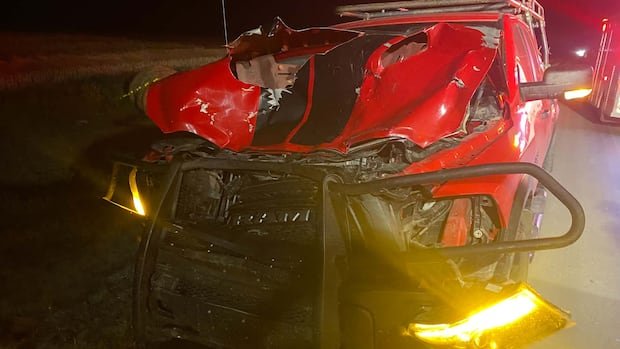

Robert Belley credits the metal bars on his truck with saving his life after a collision with a moose near Lanigan in 2024. Despite the accident, he still vividly remembers the moose struggling to cross the highway and the ensuing pain that followed. Two years later, Belley continues to suffer from severe injuries, particularly in his left hand, making it challenging for him to work in construction and maintain his usual income.
Saskatchewan Government Insurance (SGI) is cautioning the public about the heightened risk of wildlife collisions during this season, as more moose and deer are moving across roads. Each year, the province reports around 8,800 wildlife-related accidents, resulting in an average of 400 injuries and two fatalities over a five-year period.
Belley emphasizes the seriousness of the issue, urging people to be more cautious and vigilant while driving. He stresses the potential life-altering consequences of such accidents and the importance of reducing speed on highways to prevent collisions.
Troy Corbett, the director of traffic safety community engagement at SGI, notes that fall is a peak period for wildlife collisions, particularly involving deer. He advises drivers to exercise caution, reduce speed, watch for signs of animals near the road, and use high beams when necessary to avoid accidents. Corbett recommends staying calm, slowing down, and steering away from the animal if a collision is inevitable.
SGI also suggests steering toward the animal’s entry point rather than its anticipated path and being extra cautious during dawn and dusk when visibility is reduced due to glare.
Bonnie Dell, the executive director of the Wildlife Rescue Society of Saskatchewan, shares firsthand experiences of rescuing injured wildlife, such as a coyote hit by a vehicle outside Regina. She stresses the importance of contacting wildlife rescue organizations for assistance in such situations, emphasizing the value of every individual animal and the emotional toll on those involved in accidents.
Bernie Borgmann, the owner of Hooker’s Towing and Recovery, highlights the prevalence of wildlife-related incidents in his line of work, estimating that 10 to 20 percent of his calls involve such collisions. He describes the impact of hitting an animal as akin to hitting a solid object, with some animals even being thrown off the vehicle upon impact.
Borgmann recounts recent cases where vehicles collided with moose and deer, underscoring the need for increased awareness and caution on the roads, especially during this season when wildlife activity is at its peak. He emphasizes the traumatic nature of these accidents and the reminder they serve about the inherent dangers of driving.
The collective message from those involved in wildlife collisions underscores the need for heightened awareness, caution, and compassion on the roads to prevent accidents and protect both humans and wildlife alike.