

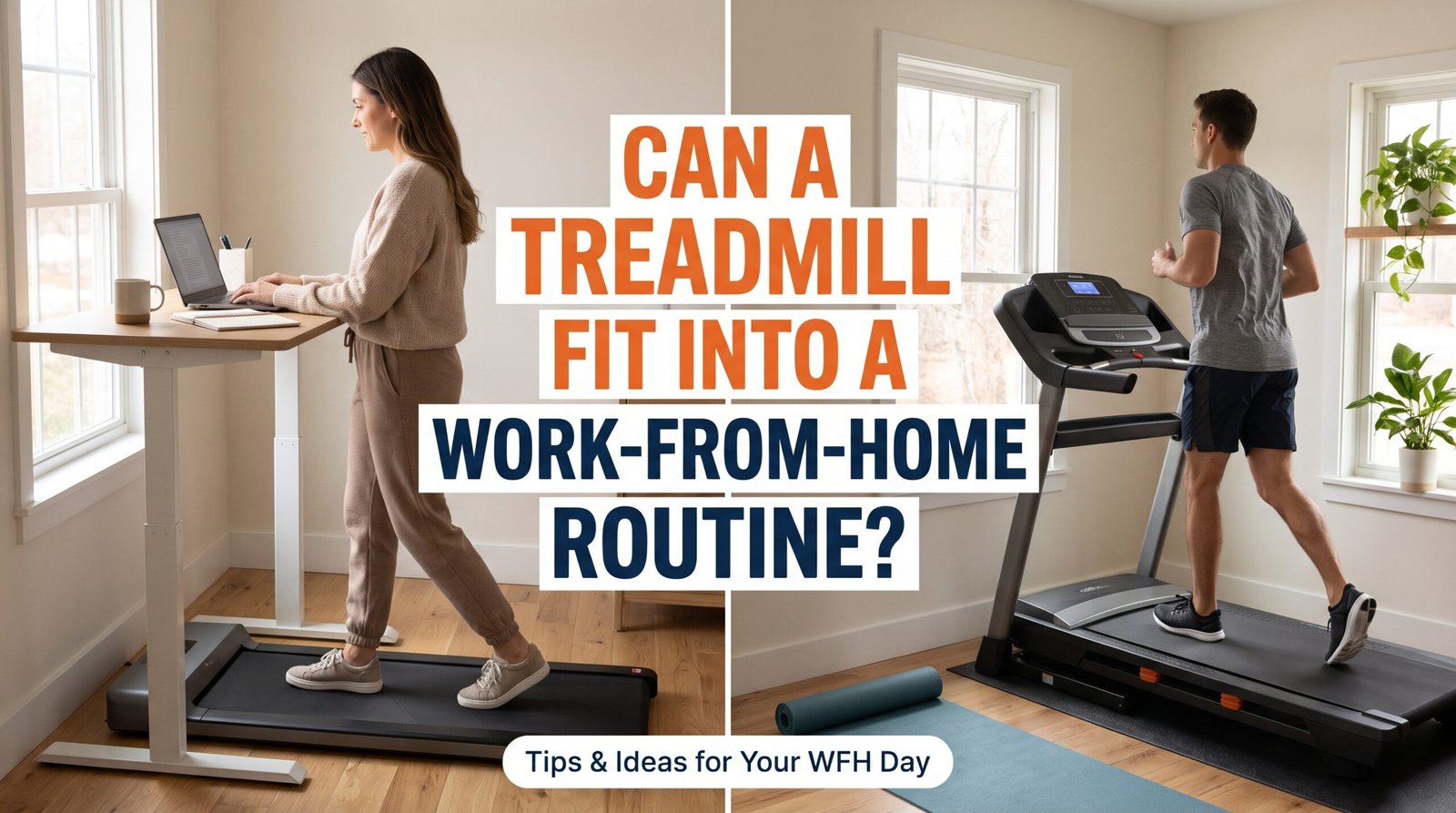

Working from home has many advantages, but it also has a hidden downside: you can end up sitting almost all day. There is no commute, no walk to the office canteen and no stroll to a colleague’s desk. Steps quietly disappear, and so does energy.
A treadmill at home offers a practical way to bring movement back into a working day. Some people even use it during light work tasks. This article looks at what works, what does not and how to build a routine that fits.
Why long sitting is a problem
Sitting for many hours without breaks is linked with stiffness, low energy, poor posture and weaker long-term health outcomes. Even people who exercise regularly can be affected if the rest of their day is entirely sedentary. The simplest remedy is to break up sitting time with regular, light movement.
Three ways to use a treadmill in a work routine
1. Scheduled walking breaks (recommended for most people)
Step off the chair and walk for 10 to 15 minutes at a comfortable pace between tasks. This works for almost everyone, requires no special set-up and does not interfere with concentration.
2. Walking meetings and calls
Audio-only calls, brainstorming sessions and listening-based meetings are good candidates for slow walking. Use a headset, keep a steady, easy pace and avoid walking if you need to present or take detailed notes.
3. Treadmill desk setups (for light tasks)
Some people place a laptop on a stable shelf or adjustable desk at the right height and walk very slowly while reading emails or reviewing documents. This takes practice. Typing accuracy and fine motor tasks can suffer, so most people find it best for low-demand work. Always put safety first and make sure your equipment is suitable for slow-speed use.
A sample work-from-home schedule
| Time | Activity |
| 8:30 | Start work |
| 10:00 | 10-minute treadmill walk |
| 11:30 | Stand and stretch for 3 minutes |
| 13:00 | Lunch, followed by a 15-minute easy walk |
| 15:00 | 10-minute walking call or treadmill break |
| 17:00 | 20-minute brisk walk to close the day |
Adjust the times around your meetings and energy levels.
Posture and safety tips
- Keep the speed low if you are doing anything other than walking, typically a slow, relaxed pace.
- Look ahead, not down, and keep shoulders relaxed.
- Use proper footwear. Even indoors, supportive shoes reduce fatigue.
- Keep your screen at eye level to avoid neck strain.
- Do not hold your phone loosely or balance items while the belt is moving.
- Use the safety key every time.
- Stop if you feel unsteady, dizzy or uncomfortable.
Will it hurt my productivity?
It depends on the task. Light activity can improve alertness and mood for many people, which may help with creative thinking and planning. Detail-heavy work, such as coding, writing or spreadsheet analysis, usually needs a steady seat. Think of the treadmill as a tool for the right moments rather than all day.
Choosing a treadmill suitable for a home office
If walking at low speeds is your main use, look for:
- A low minimum speed and smooth operation
- Quiet motor and belt so calls stay clear
- A foldable design to free space when not in use
- A stable frame with enough clearance around it
You can browse treadmill work from home friendly options such as compact folding models and compare them by size, speed range and features.
Building the habit
- Link walking to existing triggers, such as after lunch or after a long meeting.
- Set reminders to stand up every 45 to 60 minutes.
- Start with small targets, such as 20 minutes a day, and build up.
- Track your steps to see progress.
- Mix it up with brisk walks, light intervals or stretching.
Frequently asked questions
Can I type while walking on a treadmill? Some people can at very slow speeds, but accuracy often drops. Many prefer walking breaks instead.
How fast should I walk if I’m working? Slow and comfortable. If you notice you are straining, slow down or stop.
Is it better than a standing desk? They serve different purposes. Standing reduces sitting time, while walking adds gentle activity. Some people use both.
Final thoughts
You do not need an extreme change to counter a desk-bound day. A handful of walking breaks, a few light calls on your feet and one proper walk at the end of the day can make a big difference to how you feel. Start small, stay consistent and build a routine that works with your job rather than against it.
Health note: this article is for general information. Consult a doctor if you have medical concerns before changing your activity level.