


A former CIA operative has identified a European city at risk of a potential unconventional nuclear weapon detonation. Against a backdrop of heightened global tensions, including the ongoing Russo-Ukrainian conflict, looming China-Taiwan discord, and the recent apprehension of Venezuelan president Nicolás Maduro by the US, the year 2026 is perceived as increasingly precarious.
Andrew Bustamante, a former CIA intelligence officer with experience in the US Air Force and nuclear Intercontinental Ballistic Missile (ICBM) operations, offers valuable insights into these tensions. Hosting the EverydaySpy podcast, he maintains a consistent stance on nations’ readiness to respond to conventional nuclear attacks.
While Andrew deems a nuclear-tipped ICBM attack in 2026 highly improbable due to the principle of Mutual Assured Destruction (MAD), he expresses concerns about a covert non-traditional nuclear assault. This type of attack, such as a dirty bomb or a smuggled nuclear warhead, poses a more elusive threat.
Andrew highlights the potential for a non-traditional nuclear explosion, emphasizing the likelihood of such an event over a missile strike. He underscores the chaos and delayed response that would follow a clandestine attack, emphasizing the importance of immediate action to mitigate the aftermath.
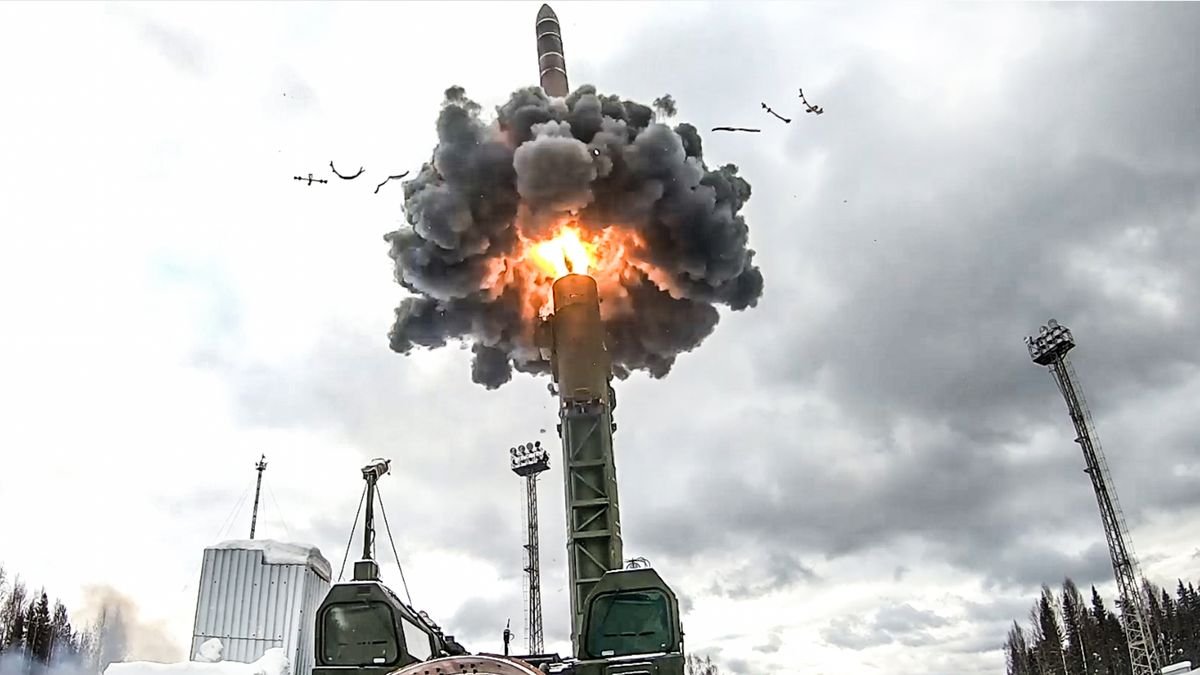
The term ‘dirty bomb’ refers to an explosive device that combines conventional explosives with radioactive material. Additionally, the Oreshnik, an intermediate-range hypersonic missile capable of carrying multiple warheads, was reportedly launched by Russia at Ukraine on January 9. Despite this, Andrew believes that a nuclear strike using such a weapon would not align with Russia’s interests.
He asserts that it is more beneficial for countries like Russia, China, and the US to pursue covert means of nuclear attack to avoid immediate retaliation. Andrew predicts a 25% probability of a nuclear device detonation, envisioning unconventional tactics like a shoulder-launched nuclear missile to create an electromagnetic pulse (EMP) in regions like the South China Sea.
In conclusion, Andrew cautions against traditional nuclear strikes, emphasizing the evolving nature of potential nuclear threats and the need for adaptive responses in the face of escalating tensions.