

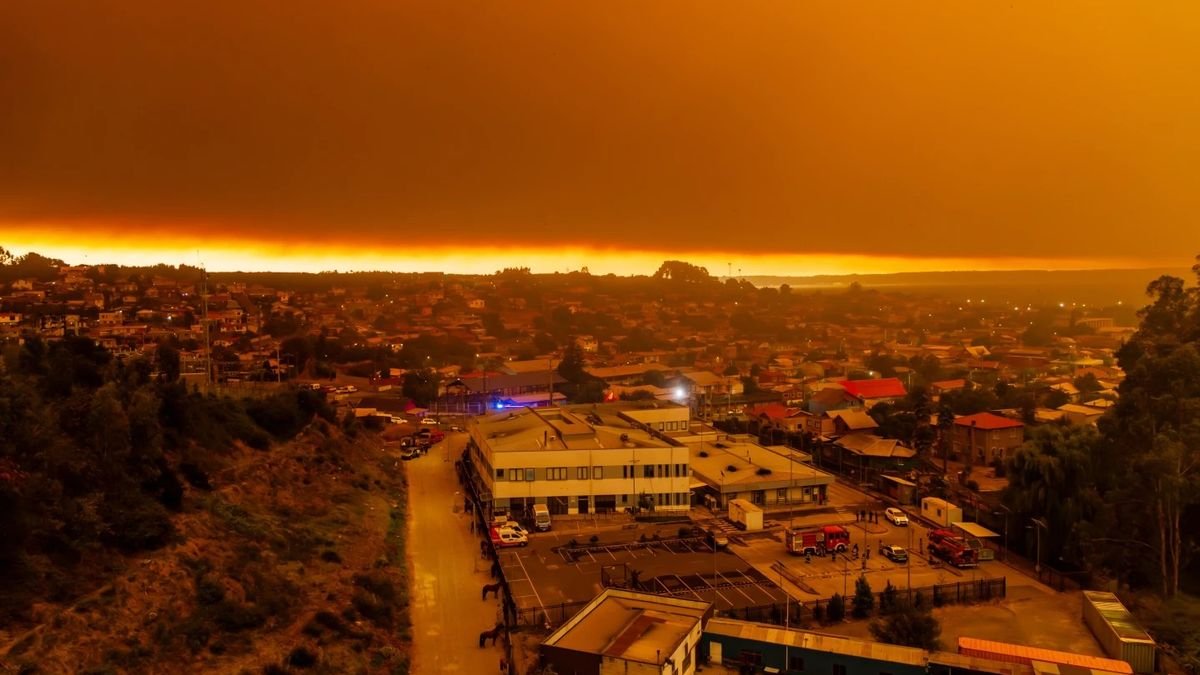

A severe heat wave in Chile has led to devastating wildfires, claiming the lives of 18 individuals. Central and southern regions of Chile have been particularly affected, with fires scorching through 8,500 hectares of land. The extreme heat and strong winds have hindered firefighting efforts, with temperatures exceeding 38C. The challenging weather conditions are expected to persist.
Interior Minister Álvaro Elizalde expressed concerns about the ongoing extreme temperatures and unfavorable weather forecast. Adding to the crisis, Chile has been grappling with a prolonged drought. President Gabriel Boric declared a state of catastrophe in the central Biobio and Ñuble regions, enabling the suspension of constitutional rights and enhanced military coordination to combat the over two dozen active wildfires.
During a press conference, Boric acknowledged the increasing death toll and property damage, with 18 fatalities and 300 residences destroyed. The number of affected homes in the Biobio region is anticipated to exceed a thousand. Boric emphasized the importance of addressing the human tragedies alongside firefighting efforts during these challenging times.
Local reports highlighted the chaotic situation as fires engulfed hillsides, forcing 50,000 evacuations. Residents, caught off guard by the rapid spread of fires, recounted harrowing experiences of fleeing their homes in darkness. The wildfires have resulted in the destruction of cars, a school, a church, and tragic loss of life across various locations.
Chile experiences wildfires annually, with the peak usually in February. In a previous devastating incident in 2024, fires ravaged the central coastline, claiming over 130 lives. The country continues to face the repercussions of natural disasters, including earthquakes and wildfires, underscoring the need for robust emergency response measures.