

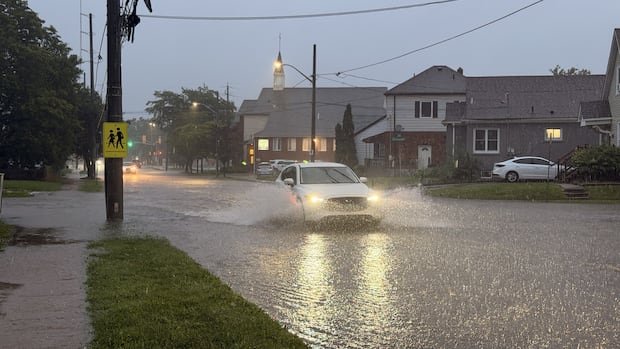

Severe flooding aftermath is still visible in St. Catharines, Ontario, with debris like couches, mattresses, and drywall lining the streets following a series of major storms within a short period. Mayor Mat Siscoe highlighted that the city faced three significant storm events in just over a week, causing unprecedented damage. While the initial storm was managed by the stormwater system, subsequent storms overwhelmed the already saturated ground, leading to widespread flooding and sewage backups in residences.
One local farmer, Dave White of White Orchard Farms, managed to protect his garlic crops despite his fields being submerged during the recent storms. Learning from past experiences, White took proactive measures to safeguard his crops by ensuring proper drainage in his fields. However, as a restoration company owner, White has been inundated with calls from distressed homeowners facing repeated flooding incidents.
The flooding in St. Catharines has underscored the urgent need for upgrading the city’s aging drainage and sewage infrastructure to cope with increasingly intense weather events. Mayor Siscoe emphasized that the current infrastructure, designed over a century ago, struggled to handle the recent deluge, exacerbated by the lack of separate stormwater systems in most parts of the city. While investments in sewer systems have increased in recent years, the scale of required upgrades presents a significant financial and labor challenge.
The recent storms in the Niagara region surpassed the capacity of existing drainage systems, with rainfall levels exceeding those used for infrastructure design. The consecutive storms, each exceeding the capacity of local stormwater management facilities, highlighted the inadequacy of the system to handle such extreme events. Despite the challenges faced, officials affirmed that treatment plants operated as intended, albeit facing unprecedented inflows that exceeded treatment capacity.
In response to the escalating flood risks, St. Catharines is exploring innovative solutions, such as redesigning parks to absorb excess rainwater temporarily. Proposals also include incorporating stormwater retention measures in new development projects to mitigate future flooding. However, the city acknowledges the limitations of funding such extensive infrastructure upgrades solely through property taxes and calls for increased provincial and federal support to address the pressing infrastructure needs.
Mayor Siscoe emphasized the necessity of a comprehensive flood resilience plan and stressed the importance of prioritizing infrastructure investments to protect residents’ quality of life. While the road to infrastructure improvement may be long, the city is committed to expediting the process within the constraints of available resources.