

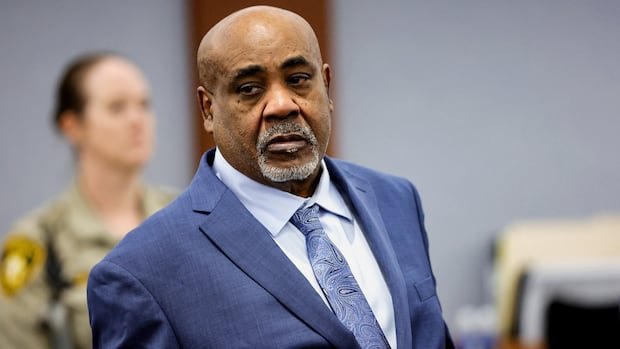

A prosecutor informed jurors during the commencement of a murder trial in Clark County, Nevada that a former gang leader masterminded the 1996 drive-by shooting of renowned hip-hop artist Tupac Shakur in Las Vegas as payback for an incident involving his nephew. Duane (Keffe D) Davis, aged 63, faces a charge of murder utilizing a deadly weapon and has entered a plea of not guilty. Allegedly, Davis led a group of individuals to perpetrate the shooting that claimed the life of Shakur, who was a prominent figure in the rap scene at the age of 25. The prosecutor emphasized that Davis ensured the assailants were armed and prepared for the attack when the opportunity for revenge arose, as revealed by Davis himself in recent public statements that reignited interest in the long-dormant case.
In response, defense attorney Michael Sanft cast doubt on the prosecution’s case, highlighting the lack of substantial evidence after three decades. Sanft dismissed Davis’s accounts in interviews and his book as unreliable, pointing out the absence of corroborating facts. The attorney urged the jury to scrutinize the credibility of the information presented by Keffe D. The killing of Tupac Shakur intensified the perception of violence associated with hip-hop culture, particularly during the peak of “gangsta” rap, contributing to the East Coast-West Coast rap rivalry during that era.
Law enforcement authorities disclosed that Davis, a longtime suspect in the murder, eluded charges due to insufficient admissible evidence until his public statements incriminated him. The trial, presided over by Judge Carli Kierny, is anticipated to extend for up to six weeks following the completion of jury selection. Testimonies from Marion (Suge) Knight, the co-founder of Death Row Records, are expected during the trial. Knight, who was present with Shakur on the fateful night and is currently serving a prison sentence for an unrelated crime, might shed light on the events surrounding the shooting.
Investigators described Davis as the orchestrator behind a swift plan to retaliate against Shakur for the altercation between the South Side Compton Crips, led by Davis, and the Mob Piru gang linked to Knight and Death Row Records at the MGM Grand casino in Las Vegas. The clash stemmed from longstanding animosity between the two Los Angeles-based street gangs. Davis reportedly procured the murder weapon and passed it to two accomplices in a white Cadillac, who subsequently engaged in the fatal shooting targeting Knight and Shakur’s vehicle. The incident resulted in Shakur’s demise six days later, while Knight sustained minor injuries.
Davis’s revelations in 2018 to various media outlets and his memoir, “Compton Street Legend,” revitalized the long-dormant investigation. Although Davis admitted to his role in the shooting, the identity of the shooter remains undisclosed. The other individuals involved in the Cadillac with Davis have since passed away. Under Nevada law, Davis can be held accountable for murder even if he did not directly pull the trigger. Tupac enthusiast O’Ron Gordy expressed skepticism about uncovering the truth behind the tragic incident, emphasizing his presence at the trial to seek potential new insights and show support for his favorite artist. Davis, in his book, hinted at his suspected involvement in the murders of both Shakur and rival rapper Christopher Wallace, also known as Notorious B.I.G., whose killing in 1997 in Los Angeles remains unsolved, with speculations linking it to Shakur’s earlier demise.