

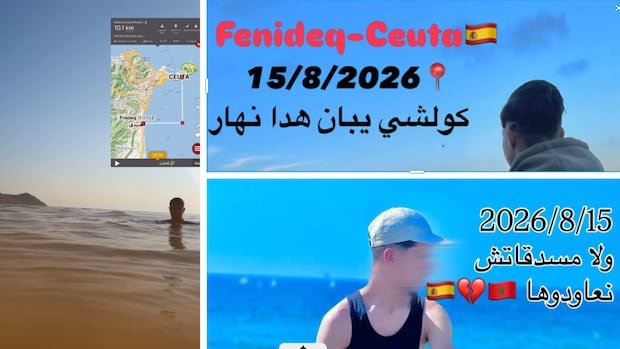

In the lead-up to one of Europe’s largest influxes of migrants in recent years, a brief video shared on Instagram gained 1.4 million views. The video depicted a young man partially submerged in water, followed by a view of the land in the distance with a sea route map from Fnideq, Morocco, to Ceuta, a Spanish enclave. The account holder claimed “we’ve arrived” in response to comments afterward.
This video was just one of many viral posts on platforms like Instagram and TikTok that seemed to have played a role in mobilizing two waves of irregular migration from Morocco to Ceuta. The most recent attempt on August 15 resulted in numerous arrests.
Various online communities, focused on migration-related culture such as music and memes, were involved in these accounts. Some of these communities seemed to be exploiting the aspirations of young individuals from Africa and the Middle East seeking better opportunities abroad.
The involvement of a single entity in the events at Ceuta has sparked debate among governments and organizations. However, it is evident that misinformation, spread through multiple online channels, significantly influenced the migration waves during the summer.
Visual investigations by CBC, with assistance from Bellingcat, identified several active social media accounts, primarily on Instagram, leading up to the first wave on July 30. Misinformation suggesting that a Spanish court ruling would allow migrants to enter by sea triggered a surge in posts. This resulted in over 72,000 people crossing the border on that day, causing chaos in Ceuta and sparking a political crisis in Europe.
While the majority of those who crossed in July have returned to Morocco, around 5,000 individuals remain in Ceuta, with some living on a beach with aid from charities. Tragically, nearly 100 people lost their lives during the crossing.
The surge in social media activity over the past month, as tracked by the Institute for Strategic Dialogue, underscores the significant impact of misinformation on vulnerable populations seeking answers.
Accounts on social media platforms directed followers to WhatsApp chats for planning crossings and shared guidance on reaching Ceuta. Some posts highlighted specific crossing points, such as a video featuring a reinforced fence with barbed wire, indicating the best spot for crossing.
Following the events of July 30, Meta and TikTok agreed to fact-check posts to prevent criminal exploitation of migrants through misinformation. Despite these efforts, a new wave of posts emerged ahead of August 15, promoting it as the next opportunity to enter Spain.
The response from Moroccan and Spanish authorities on August 15 was swift, with thousands of police deployed to both sides of the border. Morocco reported nearly 300 arrests of migrants that day.
The surge of migration-related messaging on social media reflects the widespread desperation and disillusionment among young people in North Africa and beyond. Accounts originating from North African countries, Italy, and Turkey, utilize aspirational images and language to encourage migration aspirations.
The use of hashtags mentioning European destinations and influencer-style accounts portraying departure themes has attracted a significant following. These accounts often depict images related to the Fnideq-to-Ceuta route, indicating a desire for opportunity abroad.
The impact of social media misinformation on migrant flows is significant, but it is essential to recognize that social media did not create the desire to migrate; it merely amplified existing aspirations. Desperation and lack of opportunities are key factors driving the online surge in migration-related content.