

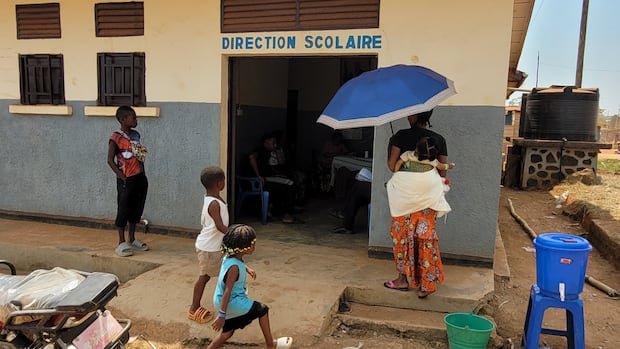

A new academic term has started in the Democratic Republic of Congo, despite concerns among parents and educators about the ongoing Ebola outbreak’s threat to children at the outbreak’s center. The re-opening of schools occurs amidst a rapidly spreading outbreak, with government figures indicating 2,950 fatalities out of 6,100 confirmed cases as of the latest data.
While the teachers’ union in Ituri province, the outbreak’s epicenter, had requested a delay in resuming classes, the government proceeded with the reopening. UNICEF is collaborating with authorities to prevent virus transmission within schools.
In Ituri, particularly government-run schools, experienced low student attendance. Local authorities did not comment on measures taken to prevent transmission in classrooms. A parent in Bunia, Ituri’s capital, Aimerance Vahweka, expressed surprise at the school restart and opted to keep her child at home, noting a perceived lack of enhanced preventive measures.
Education officials are outfitting schools with non-contact infrared thermometers, hand sanitizers, and hand-washing facilities. Etienne Ndjabu, a teacher at a private school in Bunia, highlighted efforts to educate students about adhering to hygiene protocols, emphasizing regular handwashing and sanitizer use.
Despite these actions, challenges persist, with many schools lacking access to clean water and falling short of required funding. Greg Ramm, the director of Save the Children in Congo, pointed out significant logistical hurdles, particularly in remote areas, where equipment and educational materials may face delays in delivery.
Children aged four and under have the highest fatality rate in the outbreak, standing at 60% according to health data available. Dounia Dekhili, UNICEF’s emergency coordinator in the country, emphasized the importance of safeguarding the health of students, teachers, and communities while ensuring children’s right to education.
The current outbreak, caused by the rare Bundibugyo virus, is the fastest spreading in Ebola’s history, reaching over 60 health zones. The World Health Organization (WHO) warned that this outbreak is on track to surpass the regional epidemic in West Africa from 2014 to 2016.
Strikes by health workers in affected provinces, protesting payment delays that hinder the outbreak response, have occurred. The absence of an approved vaccine or treatment has impeded containment efforts, although the distribution of the Ervebo vaccine by Congolese authorities, endorsed by WHO, offers some potential protection.
Additionally, conflicts between the government and rebel factions in the east, attacks on healthcare workers, and population displacement have exacerbated the outbreak’s severity.