

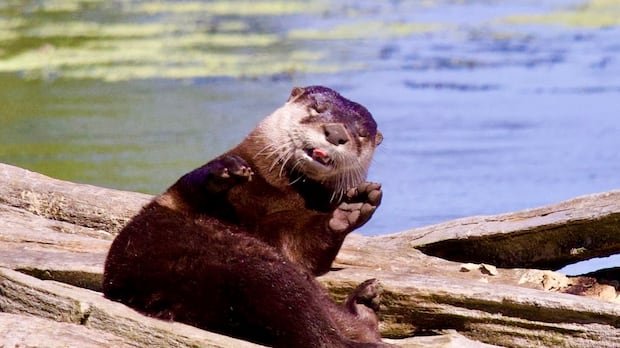

In early August, wildlife photographer Terry Chettle captured a unique moment at Grimsby Wetlands when a river otter unexpectedly interacted with a green heron, surprising both Chettle and the bird. The otter, a rare sight in the area, drew Chettle’s attention as it moved to a log and displayed playful behavior, allowing Chettle to capture its antics on camera.
During the same outing, Bruce and Laurie Mackenzie encountered Chettle, who pointed out the otter to them. Bruce Mackenzie noted the rarity of the sighting, suggesting it was the first time an otter had been seen near the wetlands in recent memory. The wetland area, previously used for sewage storage by the Niagara Region, is now managed by the Hamilton Naturalists’ Club, covering approximately 12 hectares along Lake Ontario’s South Shore. Mackenzie, involved with the club as a project manager for the wetlands, highlighted the otter sighting as a positive indicator of habitat restoration and water quality, recalling previous rare species sightings like least bitterns in the wetlands.
Laura Timms, a program manager at Credit Valley Conservation overseeing the Credit River watershed, described otters as a conservation success story, emphasizing their return to the region in recent years. Timms mentioned the increasing frequency of documented otter sightings, including instances of otter pups being born at conservation areas like Rattray Marsh and Jim Tovey Lakeview. The conservation efforts have led to a resurgence in otter populations, despite historical declines in the 1800s due to hunting, habitat destruction, and poor water quality.
While celebrating the return of otters, Timms stressed the need for continued efforts to improve biodiversity by restoring and protecting various habitats, ensuring the thriving of all species. River otters, known to grow up to 1.4 meters in length and weighing between five to 14 kilograms, play a crucial role in ecosystems as carnivorous predators hunting fish, clams, and other aquatic creatures in rivers, lakes, and creeks. Timms emphasized the importance of preserving wetlands and other habitats to support a diverse range of species, store carbon, and prevent flooding, underscoring the ongoing need for conservation initiatives to safeguard wildlife and habitats.
Overall, the sighting of the river otter at Grimsby Wetlands serves as a testament to the success of habitat restoration efforts and highlights the importance of maintaining healthy ecosystems for the benefit of all species.