


Premier Wab Kinew has disclosed that the estimated cost for the proposed expansion of the Port of Churchill, including the construction of an offshore liquefied natural gas terminal in Hudson Bay, would range between $70 billion to $80 billion.
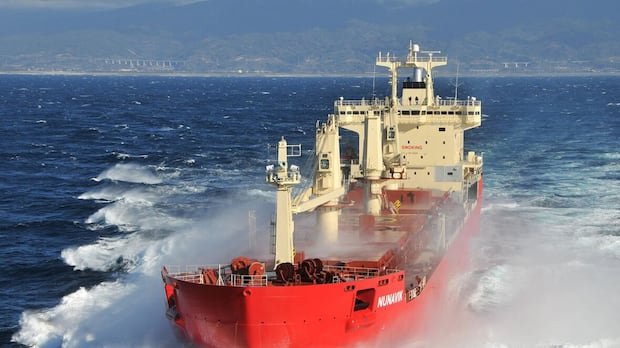
Recent studies indicate that ice-hardened freighters could navigate Hudson Bay throughout the year, extending beyond the current four-month shipping season at the Port of Churchill. However, it was highlighted that fully laden natural gas tankers designed to withstand sea ice pressure would require significant dredging, infrastructure adjustments, or the establishment of an offshore loading facility to access the existing port’s shallow and narrow entrance.
Comparatively, the construction of a liquefied natural gas terminal at Kitimat, B.C., over a 12-year period cost $40 billion. Despite the potential challenges posed by the prevailing northeastern winds in Hudson Bay, Kinew expressed optimism following new research findings suggesting the feasibility of shipping liquefied natural gas through icy waters, emphasizing the perceived lower environmental risks associated with LNG compared to oil shipments.
Kinew emphasized the prospect of year-round shipping at Churchill using current vessel technology, highlighting the need for further exploration to address the varying ice conditions in Hudson Bay. The Arctic Gateway Group, in collaboration with shipping company Fednav, assessed the requirements for expanding the Port of Churchill’s shipping season, concluding that ice-hardened freighters could facilitate year-round access currently and in the future.
While acknowledging the dynamic ice environment of Hudson Bay, Fednav emphasized the necessity of additional studies and operational assessments to support extended-season or year-round shipping operations. The potential investment in ice-hardened vessels was estimated to be significantly lower than the cost of specialized icebreakers suitable for Arctic Ocean navigation.
Furthermore, the climate projections presented in a separate academic study, including the presence of ice in Hudson Bay under certain warming scenarios, indicate the need for ongoing evaluation. Manitoba’s government, encouraged by the study results, aims to attract investors for the Port of Churchill expansion project, encompassing infrastructural upgrades to enhance the railway and port facilities.
As discussions continue regarding potential federal contributions and project prioritization, various stakeholders, including Churchill Mayor Mike Spence and MP Rebecca Chartrand, stress the importance of addressing climate change impacts and ensuring realistic expectations and timelines for the development of the Port of Churchill.
Manitoba Opposition Leader Obby Khan expressed reservations about the perceived dismissiveness in Kinew’s announcement, citing the necessity for comprehensive planning and stakeholder engagement to address potential disruptions on the Hudson Bay Railway due to changing environmental conditions.