

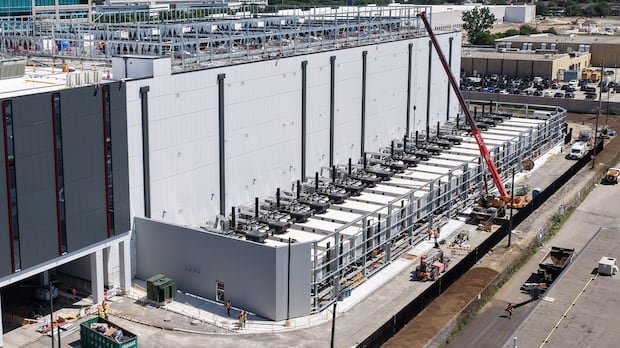

Ontario Premier Doug Ford unveiled the province’s fresh data center framework on Thursday to ensure that Canadian data remains within the country. The framework is built on three core pillars: economic development, data protection and sovereignty, and community investment alongside public confidence. Ford highlighted that through the new data center playbook, the government aims to foster the economy of the future, propelling economic growth, boosting tax revenues, and generating numerous job opportunities while ensuring compliance with regulations.
In his announcement in Guelph, Ford emphasized that the framework mandates data centers to bear the full costs of their electricity consumption, incentivizing projects to establish their power generation and introducing a distinct rate class for large new data centers, which surpasses the existing industrial rate programs for significant electricity users. The premier assured that these costs would not burden Ontario families, as the province refrains from providing financial incentives to attract investments.
The province anticipates that the framework will play a pivotal role in enhancing its artificial intelligence (AI) strategy, projecting substantial economic benefits such as $122 billion in economic growth by 2035 and the creation of 17,000 new jobs annually. This development coincides with various municipalities across Ontario contemplating moratoriums on data centers, with Oakville having recently enacted a one-year moratorium and Mississauga set to vote on a similar measure in September.
The Ontario Greens have expressed concerns about the playbook falling short, with leader Mike Schreiner advocating for a pause on new data centers. He highlighted the disproportionate benefits corporations derive from local resources compared to the communities. Additionally, concerns have been raised about the substantial water requirements of data centers and their environmental impacts, prompting calls for stringent regulations and a shift towards closed-loop water systems.
Despite recognizing the importance of data centers for future development, the Ontario Greens stress the necessity of ensuring community control and environmental protections. Schreiner emphasized the need for robust regulations to safeguard residents and communities from potential adverse effects of data centers. The Greens continue to advocate for a moratorium until stringent regulations are in place to address these concerns.
Meanwhile, Waterloo region officials are also examining the local impacts of data centers, with Coun. Colleen James tabling a motion for an information report to inform elected officials about the development, economic, and environmental implications of data centers. The report is expected to be completed early next year, aiming to provide essential insights for decision-making regarding data center expansion in the region.