

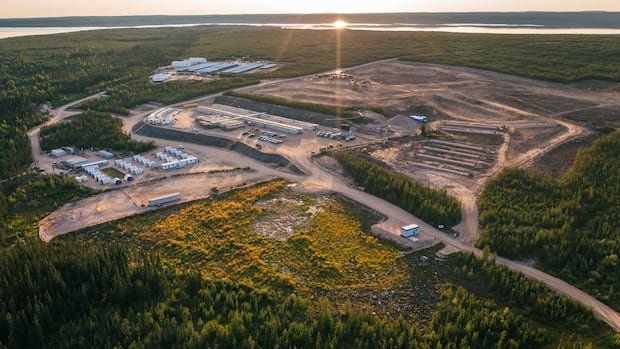

Construction has officially commenced on a new uranium mine located in northern Saskatchewan. NexGen Energy Ltd. is spearheading the development of an underground uranium mine in the southern Athabasca Basin, situated approximately 130 kilometers north of La Loche. The company anticipates investing $2.2 billion over a four-year construction phase to establish one of the world’s largest new uranium sources.
A groundbreaking ceremony took place at the mine site, featuring speeches from Premier Scott Moe, former Prime Minister Stephen Harper, and local leaders from Metis Nation-Saskatchewan and Desnethé-Missinippi-Churchill River MP Buckley Belanger. Initial construction activities are focused on surface infrastructure, with shaft development slated to commence in 2027. Additionally, the existing 914-meter airstrip is undergoing expansion to 1,780 meters.
NexGen CEO Leigh Curyer reflected on the journey leading up to this milestone, highlighting the initial challenges faced by the company. He mentioned the breakthrough moment in 2014 when mineralization was discovered on the eighth drilling hole, marking the inception of what is now considered a pivotal energy project globally.
The uranium mine is positioned to address the escalating demand for electricity, with Curyer emphasizing the strategic significance of uranium as a key resource in meeting this demand. It is projected that the mine could yield up to 30 million pounds (over 13,000 tonnes) of uranium annually, equivalent to around 20% of the current global supply.
In March, the Canadian Nuclear Safety Commission granted NexGen a license for constructing the mine and mill. The company will subsequently apply for an operational license. Once fully operational, the mine is expected to create 459 full-time jobs and operate for a lifespan of 24 years. Ongoing exploration in the region suggests the potential for developing adjacent uranium deposits in the future.
Endorsements from Indigenous communities impacted by the project have been secured, with benefit agreements established with Clearwater River Dene Nation, Birch Narrows Dene Nation, Buffalo River Dene Nation, and Métis Nation-Saskatchewan. These agreements typically encompass provisions for employment opportunities, training guarantees, support for local businesses, and financial benefits.
Premier Scott Moe underscored the significance of resource development in Saskatchewan, emphasizing the ethical approach taken to benefit local communities while contributing to global energy needs. The uranium mining sector in the province currently employs over 2,300 individuals, with nearly half of the workforce comprising residents from the northern regions.
NexGen has also collaborated with Clearwater River Dene Nation and Métis Nation-Saskatchewan Local 39 to construct a 59-bed hotel in La Loche. Concurrently, construction is underway for another uranium mine in northern Saskatchewan by Denison Mines Corp., known as the Phoenix uranium mine and mill site in the eastern Athabasca Basin. Initial estimates suggest capital costs of $600 million, with potential production commencing in 2028.
The Denison mine is poised to be the first uranium operation utilizing an in-situ recovery method, designed to dissolve uranium within the ore body using an acidic solution for extraction to the surface. Denison anticipates a 10-year operational span and boasts approximately 56.7 million pounds of proven and probable uranium reserves for the Phoenix project.