

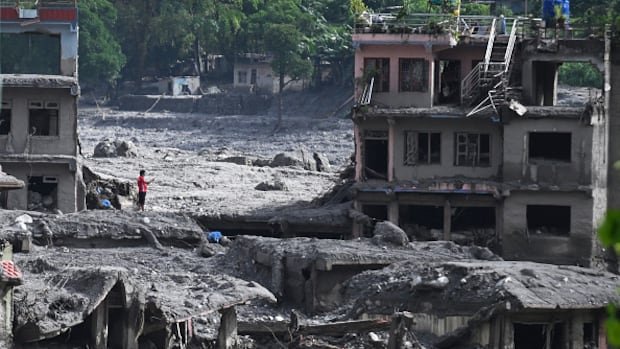

Rescue operations, including search teams with dogs, persisted on Tuesday to comb through mud, rocks, and debris along the Nepal-China border to locate numerous individuals still unaccounted for after devastating floods ravaged communities in the Himalayan region, resulting in over 1,000 fatalities.
In Kathmandu, authorities buried multiple bodies in trenches while Nepal’s disaster agency confirmed 1,003 deaths and 3,916 missing persons, including 583 foreigners. China reported 16 deaths and 546 missing, including 261 foreigners. The widespread destruction from the August 26 calamity, with landslides and damaged infrastructure, has hindered rescue efforts in both countries, with concerns rising about a potential increase in the death toll as rescuers reach isolated areas.
In Nepal, efforts are underway to rescue around 900 workers, with an estimated 500 trapped in tunnels at hydropower facilities affected by the floods. Brig. Gen. Raja Ram Basnet of Nepal’s army reported collaborative efforts with foreign experts at the damaged hydropower sites, with images depicting teams navigating through debris-filled tunnels in search of survivors.
Meanwhile, Chinese rescue teams focused on areas impacted by mudslides, particularly near the Gyirong Port border crossing. In Kathmandu, police worked in adverse weather conditions to inter bodies, with temporary graves established for unidentified individuals, each assigned a reference number for future identification by families.
Relief operations expanded to reach stranded communities, with over 11,800 individuals rescued so far. Emergency crews utilized helicopters to access cut-off areas, while the federal government pledged $5 million in emergency aid to Nepal, with additional support for reconstruction efforts being prepared.
Foreign Affairs Minister Anita Anand expressed Canada’s solidarity with Nepal and the families of the 30 missing Canadians, with Canadian officials dispatched to assist in the response efforts. China also dispatched a second batch of relief supplies to Nepal, including drones and DNA testing equipment.
The disaster originated from a glacial collapse in the Himalayas, triggering massive floods downstream, with scientists attributing the event to bedrock failure beneath a glacier. Prime Minister Balendra Shah of Nepal emphasized the urgent need for climate action in the region following the catastrophe.
Filmmaker and drone pilot Manish Maharjan, who traversed the border near the flood’s origin shortly before the disaster, joined rescue operations in Nepal, utilizing drones to locate stranded individuals. Maharjan highlighted the challenges faced in clearing tunnels filled with mud during rescue missions.