

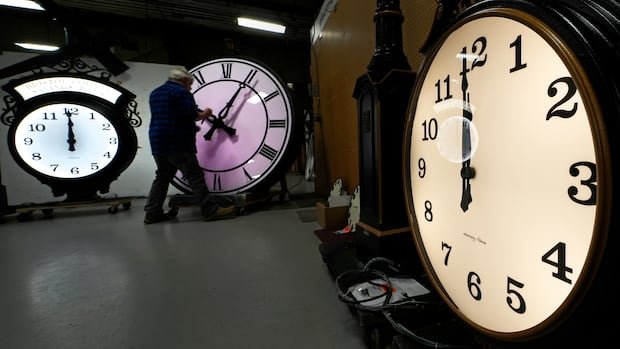

For over half a century, humanity has utilized “leap seconds” to synchronize our timepieces with the Earth’s rotation. Recently, a global timekeeping authority in France has opted to eliminate leap seconds, allowing clocks to gradually drift out of sync by up to one hour, a process that could span centuries or even millennia.
The precise atomic time, established in the 1950s by monitoring atomic vibrations, is slightly mismatched with solar time, grounded in the sun’s position relative to a specific Earth location due to the planet’s slowing rotation. Introduced in 1972, the leap second corrected this deviation by immediately adding ten seconds. The International Earth Rotation and Reference Systems Service has since been monitoring the discrepancy to determine when an additional second is necessary, resulting in 27 leap seconds being added, most recently in 2016.
Without these adjustments, noticeable changes may not occur in our lifetimes. However, prolonged lack of correction could lead to significant disruptions, such as the brightest part of the day coinciding with midnight and vice versa. Analogous to leap years adding a day every four years to maintain alignment with the seasons, leap seconds ensure synchronization between atomic and solar time.
Despite their historical utility, leap seconds have become increasingly challenging to coordinate as modern systems depend on precise timekeeping. The decision to phase out leap seconds reflects a consensus to avoid abrupt time shifts that pose logistical complications for technology and telecommunications infrastructure. Diverse methods of implementing leap seconds, like adjusting clock rates over extended periods, introduce risks of network inconsistencies and potential system failures.
The evolving Earth rotation dynamics have raised the prospect of a “negative leap second” in the future, where a second may need to be subtracted. The International Bureau of Weights and Measures has endorsed accumulating these extra seconds until they total 3,600 seconds, equivalent to an hour, before readjusting clocks, a change scheduled for May 2027.
While some experts acknowledge the challenges posed by leap seconds, others express skepticism about discarding this timekeeping practice. The intricate interplay of factors affecting Earth’s rotation speed, including lunar and climatic influences, underscores the complexity of maintaining accurate time standards amid natural variability. Despite the imperfections in timekeeping systems, the enduring human endeavor to align with celestial movements underscores the timeless struggle to capture the essence of time accurately.