

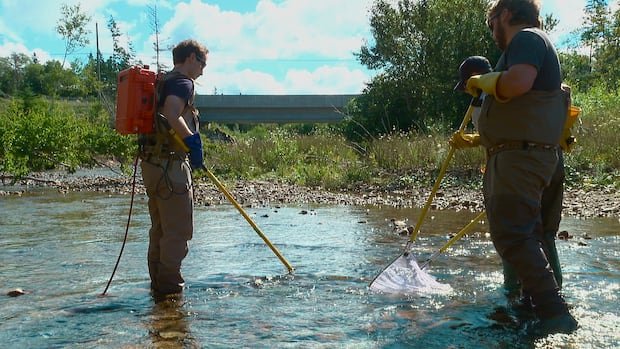

In recent years, the Margaree Salmon Association in northern Cape Breton has been utilizing electrofishing as a method to monitor fish populations in the Margaree River. This technique involves using an electric current to temporarily stun fish, allowing crews to safely capture, measure, and identify them before releasing them back into the river.
Michael Fabiano, the conservation co-ordinator of the association, mentioned that electrofishing operations typically run from May to late September. Despite processing thousands of fish each season, the method maintains a low two per cent mortality rate. Fabiano emphasized the priority placed on fish safety, ensuring that electrofishing is avoided during high water temperatures.
To minimize any risks associated with working with electricity in water, crew members wear heavy rubber gloves and chest waders while setting current levels to only momentarily stun fish. Over the course of the 120-kilometre river, crews survey various locations to pinpoint the most productive streams and evaluate the overall health of the fish population, primarily consisting of trout and Atlantic salmon, with occasional sightings of eels and lampreys.
This season, the association has captured and released approximately 1,800 fish from nine streams, a decrease from the previous year. Fabiano attributed this decline partly to the challenging conditions experienced last year, including low water levels and high temperatures due to a severe drought that adversely affected the Margaree River.
Paul MacNeil, the association’s president, highlighted the increased focus on scientific research in response to reduced data collection efforts by Fisheries and Oceans Canada over the past five years. Founded in 1982, the association aims to gather reliable data to monitor the river’s health amid changing climate conditions. Partnering with the Chéticamp River Salmon Association, they acquired electrofishing equipment to supplement fish counting activities. MacNeil emphasized the accuracy and efficiency of electrofishing in capturing juvenile fish populations within specific territories.
The association’s proactive approach to monitoring fish populations through electrofishing reflects their commitment to ensuring the sustainability and health of the Margaree River ecosystem.