

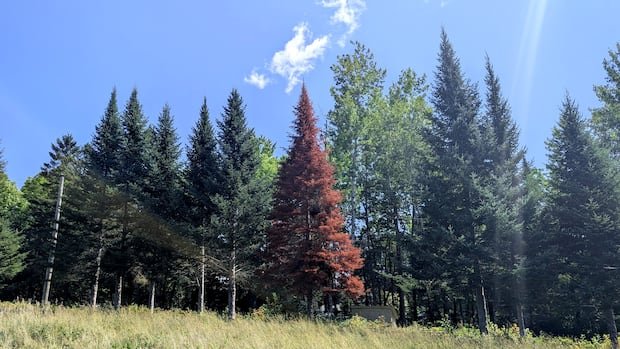

Balsam fir trees in New Brunswick are exhibiting a concerning trend of turning red and perishing following the severe drought experienced last summer, sparking worries about the fate of this iconic provincial tree. Professor Anthony Taylor, a forestry researcher at the University of New Brunswick, has been actively engaging with woodlot owners and witnessing firsthand the detrimental effects as these vibrant evergreen trees, often sought after for Christmas decorations, gradually transition to a red, desiccated state before succumbing to death.
According to Taylor, the observed pattern aligns with previous instances following periods of hot and dry weather. He emphasized that the balsam fir’s growth is significantly hindered by warm and dry conditions, such as those encountered during the recent drought. Taylor, who has dedicated years to studying the impact of climate change on New Brunswick’s forests, highlighted similar die-offs of balsam firs following unusually scorching and dry summers in 1986 and 2018.
The decline in tree health is attributed to the halt in the photosynthesis process triggered by drought conditions, inhibiting growth and energy production necessary for basic metabolic functions and defense mechanisms. Taylor explained that this compromised state puts the trees at a disadvantage, rendering them more susceptible to stressors like insects or pathogens, ultimately increasing the likelihood of mortality.
Moreover, balsam firs’ shallow root systems pose challenges in accessing water during dry periods, exacerbating their vulnerability. Peter McKeil, a woodlot owner in Burtt’s Corner, observed the progression of damage on his property since June, noting the gradual reddening of the trees from the lower branches upwards. Despite processing some of the deceased trees into lumber, McKeil is adjusting his harvesting strategies to maximize the remaining fir’s value before further losses occur.
Expressing concerns about the worsening impact of climate change, McKeil expressed a grim outlook for the species in southern New Brunswick, suggesting a need for adaptation or potential disappearance as temperatures rise. Taylor underscored the importance of recognizing the red trees as a visible indicator of climate change’s adverse effects, urging for swift climate action to mitigate further ecological disruptions.
As the red trees serve as a poignant symbol of environmental distress, Taylor emphasized the urgency in transitioning away from fossil fuels and implementing sustainable forest management practices to curb the escalating effects of climate change. The current situation with the balsam firs underscores the pressing need for proactive measures to safeguard New Brunswick’s natural ecosystem.