

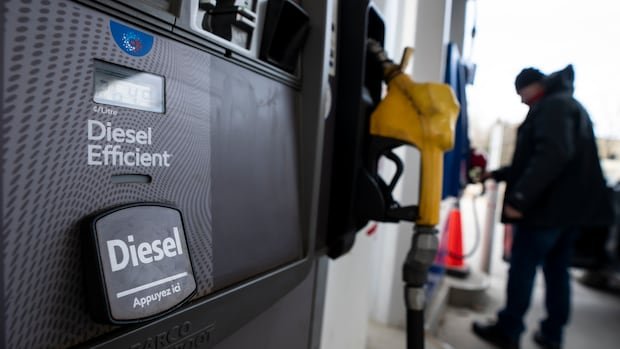

The surge in diesel prices, attributed to global conflicts, is causing significant financial strain on the trucking industry in Canada, experts reveal. The escalating costs of fuel are a major concern for trucking companies, with commercial trucks consuming substantial amounts of fuel weekly. Since the spike in prices following the 2022 Russia-Ukraine conflict, the industry has been operating on tighter margins.
As of the latest update, diesel prices in Canada have reached $2.62 per litre, surpassing last week’s high of $2.52. This marks an increase of over a dollar compared to the same period last year. Notably, Vancouver recorded even higher prices at $2.92 per litre, while the United States experienced a record-high average diesel price of over $6 per gallon.
Geopolitical conflicts, particularly the U.S.-Israel-Iran tensions, are driving the surge in oil prices, overshadowing concerns about tariffs on Canadian goods. The limited supply of diesel is a critical issue, with exports from the Persian Gulf region significantly reduced. Russia’s ban on diesel exports and the temporary shutdown of Canada’s largest refinery in New Brunswick further exacerbate the supply shortage.
To alleviate the impact, the federal government has extended the suspension of the federal fuel excise tax through January 2027. However, experts warn that this measure may not sufficiently offset the rising costs. The situation poses a significant threat to the North American economy, according to industry analysts.
Looking ahead, energy analyst Dan McTeague predicts a potentially expensive winter due to historical trends of rising diesel prices during the season. This forecast raises concerns for various sectors, including transportation and food production, as any increase in diesel costs affects the entire food supply chain. The complex interplay of factors, such as extreme weather events impacting harvests, suggests a challenging road ahead for consumers.
Amid uncertainties in global food production and trade, the prospect of prolonged elevated food prices looms, posing challenges for low-income Canadians in the short term. The convergence of multiple challenges is driving up food prices, signaling a potential shift towards a new normal of heightened costs in the food industry.