

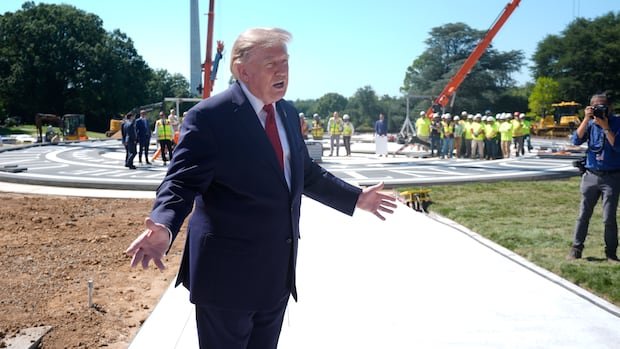

Canada and the United States are in the process of finalizing a trade pact that is anticipated to involve U.S. President Donald Trump reducing tariff rates on Canadian products in exchange for the reintroduction of American liquor into provincial retail outlets, among other potential compromises. Prime Minister Mark Carney briefed provincial leaders on the framework of the agreement, which is gradually taking shape and is being positioned as a means to aid industries affected by tariffs, although it may face criticism for not completely eliminating Trump’s tariffs.
While specific details of the agreement have not been disclosed publicly, a source familiar with the forthcoming deal revealed that U.S. tariffs on Canadian steel and aluminum are set to drop from 50% to 25%. Negotiations on derivatives and exemptions are ongoing. The agreement is also expected to lower Trump’s primary tariff rate on Canadian-manufactured cars and trucks from 25% to 15%.
Given the high level of integration in the North American auto market, vehicles assembled in Canada typically contain over 50% of U.S.-made components. If the tariff is applied solely to the non-U.S. portion, the effective rate could potentially decrease by up to half (7.5%), as per the source. Following the meeting, two premiers publicly commended the efforts of Carney and his team in dealing with Trump.
Saskatchewan Premier Scott Moe expressed confidence in Carney’s ability to broker a top-tier trade agreement with the U.S., which he believes will offer superior market access compared to any other country. Moe acknowledged that the trading dynamics with the U.S. have changed significantly due to Trump’s protectionist stance, emphasizing that the previous status quo was no longer viable.
Nova Scotia Premier Tim Houston also conveyed optimism about the progress made in the negotiations, highlighting the favorable aspects for Canada, including the preservation of the supply management system and advantageous defense procurement terms. He affirmed that the country is moving in a positive direction.
Carney’s request for provinces to reintroduce U.S. alcoholic beverages in government-run liquor stores was well-received by Houston, who indicated a willingness to comply. Trump expressed satisfaction with the deal, describing it as beneficial for both countries, although he provided limited details on the specifics of the agreement.
Carney, in a social media statement, noted significant advancements in the negotiations with the U.S. and underscored the potential benefits for Canada compared to other nations grappling with Trump’s tariffs. The Prime Minister’s Office emphasized Carney’s commitment to securing the best possible deal for Canadians and maintaining economic resilience at home while expanding global partnerships.
Canada has been advocating for relief for sectors such as steel, aluminum, autos, and lumber, which have been burdened by tariffs exceeding 25% for over a year. The U.S. has proposed reducing these rates as part of the ongoing negotiations, aiming to eliminate tariffs on Canadian imports entirely. Ottawa has imposed retaliatory tariffs on select U.S. goods in response to the trade dispute.
Trump’s efforts to negotiate a favorable deal have been welcomed by the business community, with calls for a swift resolution to provide much-needed stability. Candace Laing, CEO of the Canadian Chamber of Commerce, emphasized the importance of a signed interim agreement to offer certainty to businesses amid the current uncertain climate.