

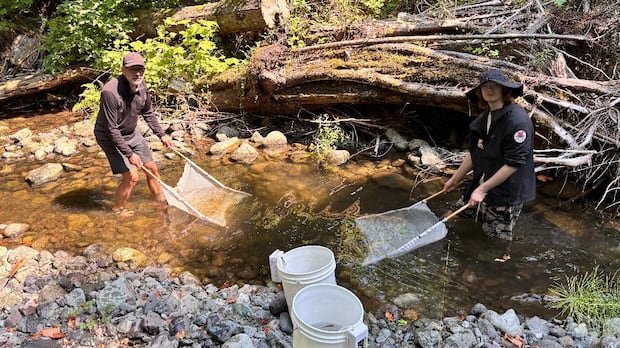

Parts of British Columbia are facing severe drought conditions this summer, leading to restrictions on water use in areas like Bessette Creek to safeguard salmon populations from dwindling water levels. Temporary orders for Salmon River watershed protection were also issued and then reinstated due to heightened wildfire risks. Concerns extend beyond these areas, with Bob Crandall from the Cowichan Lake Salmonid Enhancement Society noting the increasing dryness of the 16 streams linked to Lake Cowichan each year. The society actively engages in fry salvage operations, manually relocating fish from depleting rivers to more sustainable water bodies.
Crandall emphasizes the importance of human intervention in mitigating ecosystem challenges caused by human actions. While communities in British Columbia support these efforts, scientists caution that such measures have limitations and may not offer long-term solutions. Collaborating with the Ts’uubaa-asatx Nation and volunteers, Crandall focuses on gathering and transporting various fish species like salmon, trout, and char to safer environments amid changing climate conditions. The fry salvage initiative, ongoing since 1984, faces increasing difficulties as streams dry up further upstream, requiring more extensive efforts for relocation.
The process involves deploying aerators and nets to ensure adequate oxygen levels for the fish during transport, with challenges heightened by scorching temperatures. The Ts’uubaa-asatx Nation plays a crucial role in these endeavors, utilizing drones to monitor drying streams and actively participating in fish relocation activities alongside volunteers. The community’s strong commitment to salmon conservation underscores the significance of these projects, as they invest resources and manpower to protect this vital resource for current and future generations.
Similar rescue operations worldwide encounter constraints amid escalating drought and heat levels. In France, unprecedented weather events have disrupted fish relocation efforts, with extreme heatwaves impacting river ecosystems significantly. The Fédération de Pêche du Rhône highlights the inadequacy of traditional management approaches in the face of rapidly changing conditions, advocating for ecosystem restoration and sustainable water management as more effective long-term strategies. Stressing the adverse effects of fish relocation on stressed populations, the organization emphasizes the need for holistic conservation efforts to address the root causes of environmental degradation.
In conclusion, while fry salvage initiatives play a critical role in protecting vulnerable fish populations, addressing underlying environmental issues through comprehensive conservation measures remains imperative to ensure the long-term sustainability of aquatic ecosystems.