

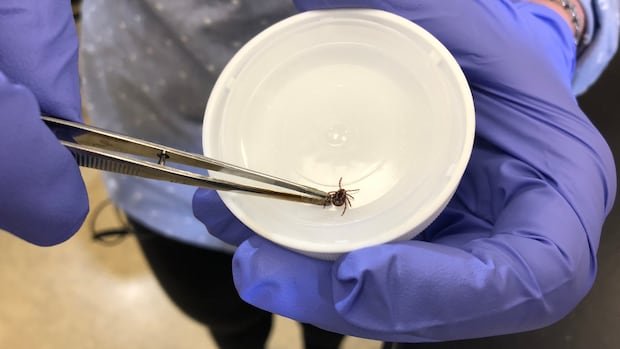

A research laboratory at Acadia University in Nova Scotia will receive a funding boost of $1.2 million from the provincial government to further its studies on preventing and managing illnesses transmitted by ticks.
Nicoletta Faraone, the head of the Canadian Tick Research and Innovation Centre, emphasized the importance of this financial support in establishing and expanding the lab’s capabilities. The funding will primarily go towards enhancing the lab’s surveillance program, which focuses on identifying tick species in the region, analyzing the pathogens they carry, and evaluating their responses to repellents and attractants.
Tick-borne diseases, such as Lyme disease and anaplasmosis, can be transmitted to humans through the bites of these blood-sucking arachnids. With cutting-edge equipment in place, the lab aims to expedite the process of testing for pathogens to gain better insights into tick behavior and enhance preparedness to minimize exposure to tick bites.
The funding, provided through Research Nova Scotia’s Focused Research Initiative supported by the Department of Advanced Education, underscores the growing importance of addressing tick-borne diseases for both people and animals. Stefan Leslie, the CEO of Research Nova Scotia, highlighted the necessity of research that can translate from the laboratory to practical applications in combating these health threats.
Recent data from the Public Health Agency of Canada revealed a significant rise in Lyme disease cases, with over 5,800 reported incidents nationwide in 2024, of which 2,350 were in Nova Scotia alone. Furthermore, other tick-borne illnesses like anaplasmosis are also on the upsurge, demonstrating the pressing need for continued research and preventive measures.
In addition to the provincial funding, the federal government is contributing $455,000 to the project through the Atlantic Canada Opportunities Agency, enabling the lab to further its research efforts, including establishing a tick breeding program. Previously reliant on purchasing ticks from a facility in the United States, the Acadia lab can now breed ticks locally, facilitating genetic studies on Canadian tick populations and potentially serving as a revenue source through selling specimens to researchers nationally and internationally.
The initiative aims to bolster knowledge on ticks and enhance readiness in combating tick-borne diseases, with the lab already actively breeding ticks and monitoring optimal conditions for their proliferation.
For more information, see the original article [here](https://www.cbc.ca/news/canada/nova-scotia/acadia-tick-lab-funding-9.7320252).