

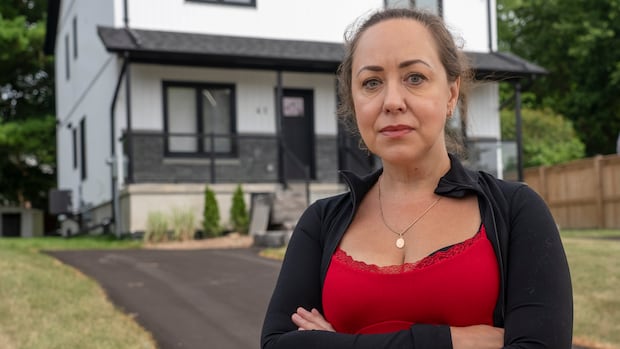

The blaze that ravaged Antonina Gladkova’s home at the start of 2024 marked the onset of a prolonged period of frustration and financial strain, costing her tens of thousands of dollars and prompting her to alert fellow homeowners about the intricacies of their mortgage contracts concerning insurance claims.
However, she described the fire as “just the first nightmare.” “It escalated from there,” she added.
Initially, Gladkova felt a sense of relief as she navigated the claims process with her insurance company, which agreed to cover the entire cost of reconstructing her side of the semi-detached house in Georgetown, Ontario.
Unfortunately, her mortgage lender did not release the insurance funds in sync with her contractor’s billing schedule. Now, she and her boyfriend find themselves tens of thousands of dollars in debt and reliant on a private mortgage they had to secure to cover the financial gaps and maintain construction amidst expensive delays.
“We were completely outraged,” she stated.
While it is standard practice for insurance disbursements to be made in stages via a homeowner’s mortgage provider, legal professionals indicate that scenarios like Gladkova’s are increasingly prevalent. This has motivated her to share her story to help others avoid similar pitfalls.
“The entire system is flawed. That’s why I want everyone to be aware… be prepared,” she cautioned.
‘A chicken and egg situation’
In February 2024, a fire ignited in the adjacent half of Gladkova’s semi-detached home. Tragically, her neighbor lost their life in the fire, which spread to her side, utterly obliterating it. Gladkova had been renting out the property for several years after moving in with her boyfriend.
More than a year after the incident, the insurance payout for rebuilding was authorized at just over $508,000. Given that they had a mortgage, the lender, Simplii Financial, was tasked with disbursing the funds.
The contractor demanded an initial payment of $101,600; however, Simplii only released $25,000, as indicated by bank statements reviewed by CBC News.
Following the couple’s inquiry, Simplii, which operates under CIBC, approved an additional $25,000 as a “one-time exception.” Yet, they were still short by 50 percent.
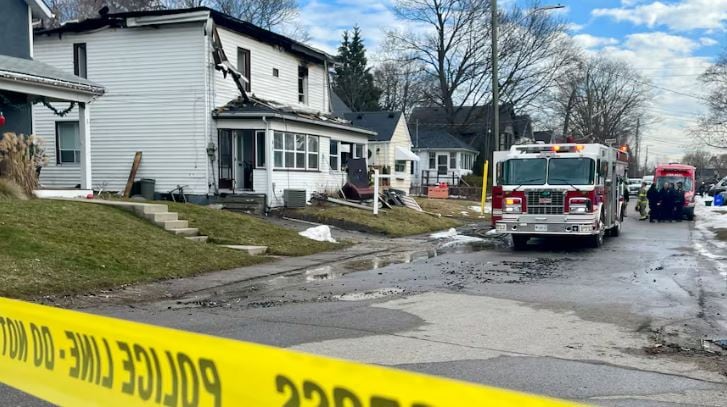
A fire occurred on the opposite side of Antonina Gladkova’s semi-detached residence in Georgetown, Ont., in February 2024, leading to the complete destruction of both homes. (Mehrdad Nazarahari/CBC)
Gladkova explained that the initial procedure required the bank to release funds in accordance with invoices from the contractor and verification of completed tasks. This, however, necessitated that the contractor, whom she claims was appointed by the insurance company, finance the work upfront.
“You cannot proceed with construction without the funds. So it’s akin to a chicken and egg dilemma,” Gladkova remarked.
The couple lodged a formal complaint with Simplii, asking the bank to release an additional $51,600 to settle the invoice in full and continue construction. The bank refused.
Gladkova stated they lacked sufficient funds to cover the gap, prompting them to secure a private mortgage with a 10 percent interest rate.
Following their formal grievance, records indicate Simplii modified its process to disburse funds based on progress reports of the completed work. For instance, if 20 percent of the work was finished, Simplii would then provide 20 percent of the total insurance payout.
However, correspondence between Gladkova and Simplii reveals that the bank began calculating based on the first insurance payment rather than the total payout, which Gladkova claims led to the couple continually being approximately 35 percent short in compensating the contractor.
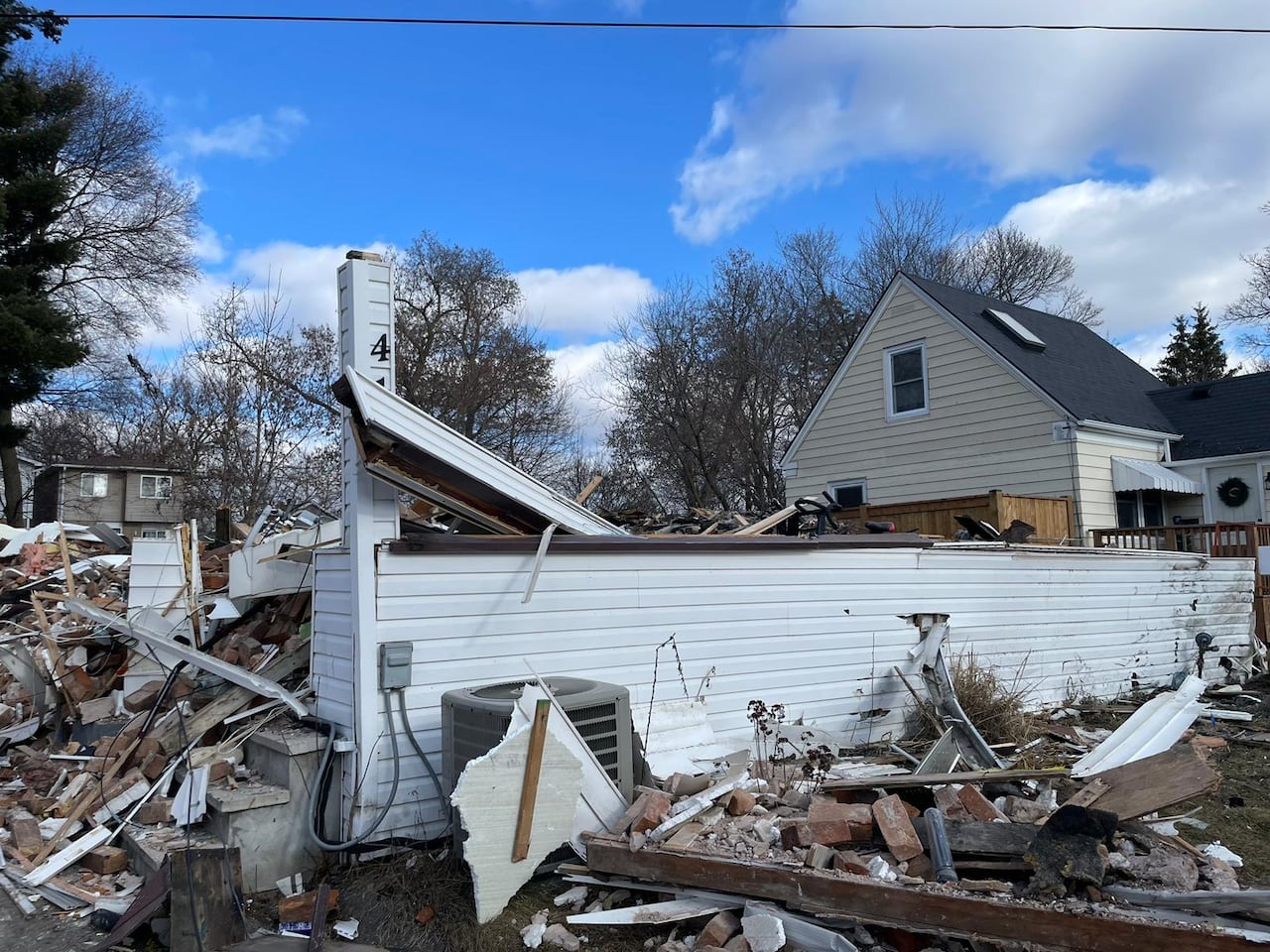
Antonina Gladkova’s property was entirely destroyed in the fire, and her insurance company covered the costs to rebuild the home. (Submitted by Antonina Gladkova)
Eventually, Simplii released all funds, including an additional exception payment this past April to address a shortfall for the third construction invoice.
The reconstruction was finalized last June, approximately six months behind the original timeline as outlined in the construction contract.
Gladkova reported that the couple has incurred around $15,000 in interest on the private mortgage and additional thousands in fees related to setting up the private mortgage and legal expenses.
According to Gladkova, a remaining balance of roughly $19,000 is still owed to the contractor due to delays caused by their inability to pay him on time.
She explained that due to the private mortgage and the lagging insurance payouts, their debt “accumulated and soared rapidly.”
Simplii’s response
In a statement, Simplii representative Kira Smylie expressed that the bank understands the challenges clients face when dealing with property damage and that “whenever feasible, we collaborate with our clients to provide flexibility, as we did in this instance.”
Smylie also noted that Simplii’s mortgage terms grant the bank the authority to determine how insurance proceeds are allocated.
-
Video
What you need to know about dealing with insurance companies after a wildfire
-
Uninsured homeowners ‘stuck in a rut,’ unable to rebuild 1 year after Kingston fire
“Before finalizing the payment terms with a contractor, clients should verify the payment schedule with us so they can make informed choices,” she stated.
Gladkova wishes to caution others about the ambiguous language often found in mortgage agreements. She believes that had the bank informed them of their responsibility for any shortfalls, they would have pursued different options.
How to protect yourself
Typical mortgage clauses stipulate that insurance funds are paid to the lender, which then releases the money according to a schedule, as the lender has a vested interest in the property and wants to ensure the funds are utilized for rebuilding, according to attorneys specializing in real estate and home insurance.
Fy Virani, the founder of Virani Law, which focuses on home insurance claims, asserts that situations akin to Gladkova’s, where payment schedules do not align, are becoming increasingly frequent. He attributes this trend to lenders tightening their grip on insurance disbursements due to the rise in total loss claims resulting from fires and floods.

Fy Virani, an attorney specializing in home insurance claims and the founder of Virani Law, indicates that he is witnessing a rise in the issue of misaligned insurance payment schedules with contractor invoices. (Submitted by Fy Virani)
“We’re encountering a growing number of total losses due to fires and floods,” he stated. “Consequently, a communication gap arises between these entities that are unaccustomed to being aligned.”
Virani recommends that property owners foster clear and open communication with lenders, contractors, and insurance providers to guarantee that all parties are aligned and that payment schedules are coordinated prior to the commencement of construction.
“Once funds start moving, it becomes exceedingly difficult to rectify the situation,” he noted.
Filing complaints
At the conclusion of 2025, Gladkova lodged a complaint with the Ombudsman for Banking Services and Investments (OBSI), an independent Canadian organization that aids in resolving disputes between banks, investment firms, and clients.
She sought compensation from Simplii for the interest incurred on the private mortgage and $4,000 in associated fees.
-
Tenants of flood-damaged buildings seek answers about their rights
-
Severe weather drives record-breaking insurance claims in Sask.
According to her, the OBSI concluded its investigation last June, determining that while Simplii was not liable for the additional expenses incurred and was not bound by the agreement reached with the contractor, the bank did cause significant distress and inconvenience by failing to inform the couple that they might need extra financing to complete the project.
The OBSI recommended that Simplii pay the couple $500 in compensation, a proposal the couple rejected.
“It felt like a slap in the face,” Gladkova remarked.
In a statement, the OBSI mentioned that its complaint resolution process is confidential and cannot comment on specific cases.
Gladkova has since filed a complaint with the Financial Consumer Agency of Canada, which oversees federal external complaint bodies, including banks and the OBSI. She aspires to see modifications to mortgage agreements that would allow banks to disburse insurance payments directly to contractors.
“I hope this can be addressed,” she expressed. “No one should have to go through this as it was life-altering.”