

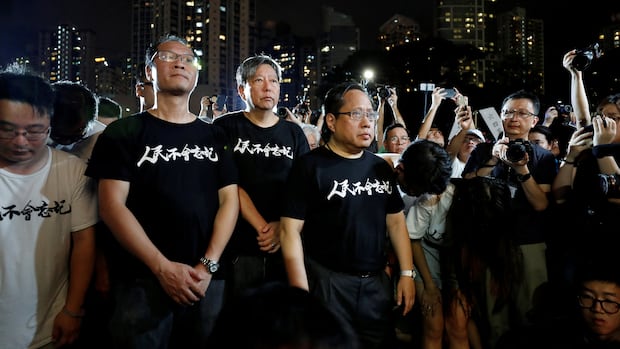

On Friday, a Hong Kong court handed down prison sentences to three activists who had been organizing vigils for years to honor the victims of China’s Tiananmen Square crackdown in 1989. The sentences, which range from five to over seven years, are perceived as an indicator of the diminishing freedoms in the city as Beijing intensifies its crackdown on dissent.
Earlier this year, Lee Cheuk-yan, Chow Hang-tung, and Albert Ho were found guilty of inciting subversion under a national security law imposed by Beijing.
Lee was sentenced to seven years, while Chow received a term of seven years and three months. Ho’s sentence was five years and two months, which was shorter than his co-defendants’ sentences, partly due to his guilty plea.
The three activists were charged in September 2021 and have remained in custody since.
Hong Kong was once characterized by a lively civil society, with large-scale protests and a vibrant press environment.
For thirty years, the vigil stood as the only major public commemoration in China, attracting tens of thousands of participants each year. It represented the civil liberties that Hong Kong residents enjoyed under the “one country, two systems” framework following the 1997 handover from Britain to China.
-
Hong Kong pro-democracy activist Joshua Wong pleads guilty in 2nd national security case
-
Tiananmen Square vigil organizers convicted of ‘inciting subversion’ in Hong Kong
However, following the protests in 2019, the government limited electoral choices and initiated legal actions against media leaders known for their critical stance toward the administration. Numerous prominent activists have been imprisoned under the security law, and many civil society organizations, including the alliance that organized the vigils, have disbanded.
Beijing claims that the law is essential for maintaining stability.
The sentences imposed on these Tiananmen activists represent the latest significant penalties enacted under the national security law.
In February, former media tycoon Jimmy Lai, a pro-democracy advocate, was sentenced to 20 years in prison.
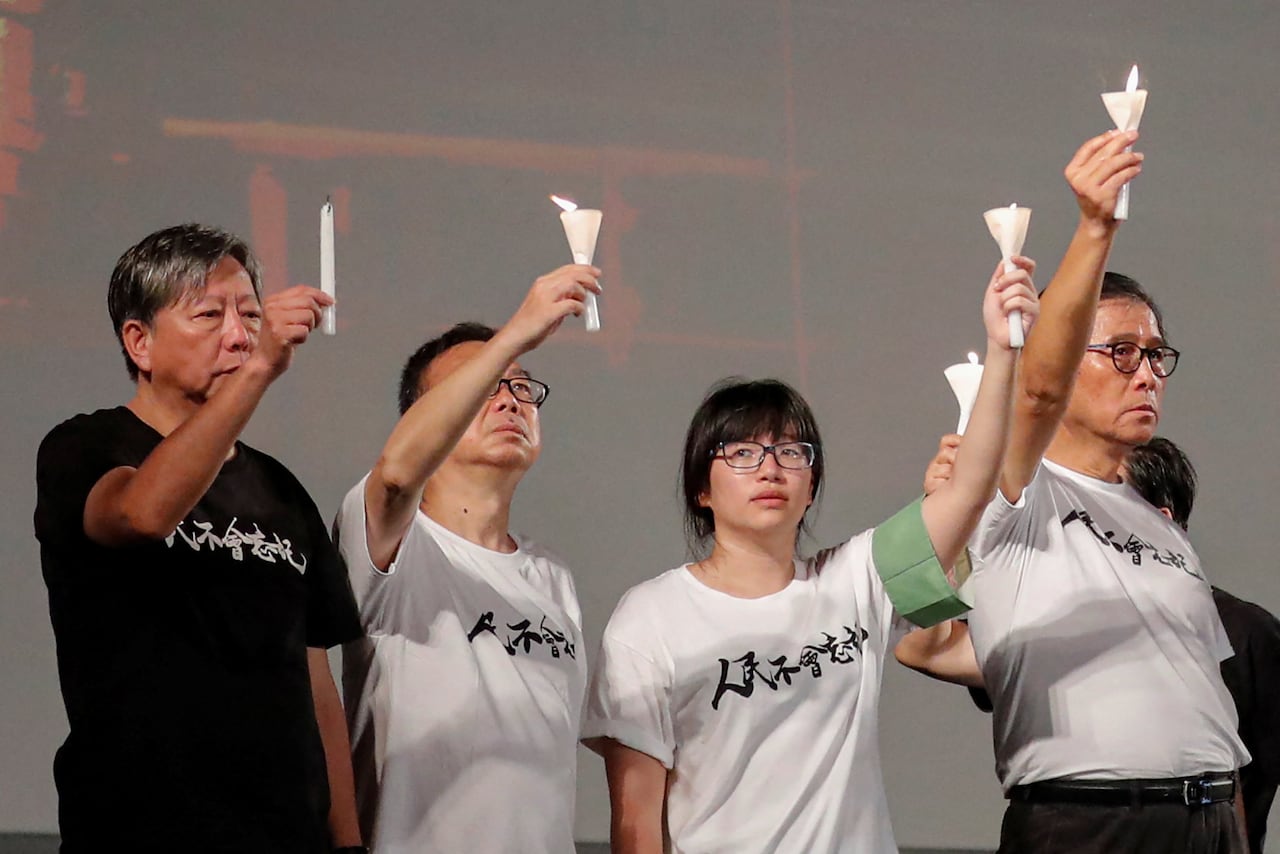
Chow, third from left, attends a candlelight vigil to mark the 30th anniversary of the crackdown of pro-democracy movement at Beijing’s Tiananmen Square in 1989, in Hong Kong, on June 4, 2019. (Tyrone Siu/Reuters)
Plans for Appeals
Following the sentencing, Elizabeth Tang, Lee’s wife, informed the media that Lee was mentally prepared for the worst outcome and remained composed. She indicated that he intends to appeal the ruling.
Tang expressed that freedom of speech is absent in Hong Kong and that the sentences would deeply shock and anger many. She stated that millions either attended or supported the vigil.
“This sentence is not just a punishment for them; it’s a punishment for many others too. It’s incredibly difficult to accept,” she commented.
Medina Chow Lau Wah-chun, Chow’s mother, humorously remarked that she should be grateful to those who prosecuted the defendants for ensuring that the truth of the 1989 crackdown and recent events in Hong Kong would be documented in court records.
“Years ago, my daughter expressed her desire to have a serious discussion with them one day,” she stated.
Chow’s friend Lau Ka-yee confirmed that Chow also plans to appeal.
Chow, who represented herself during the proceedings, previously stated that the verdict implied that seeking democracy is a criminal act and asserted that she did not deserve even a single day in prison.
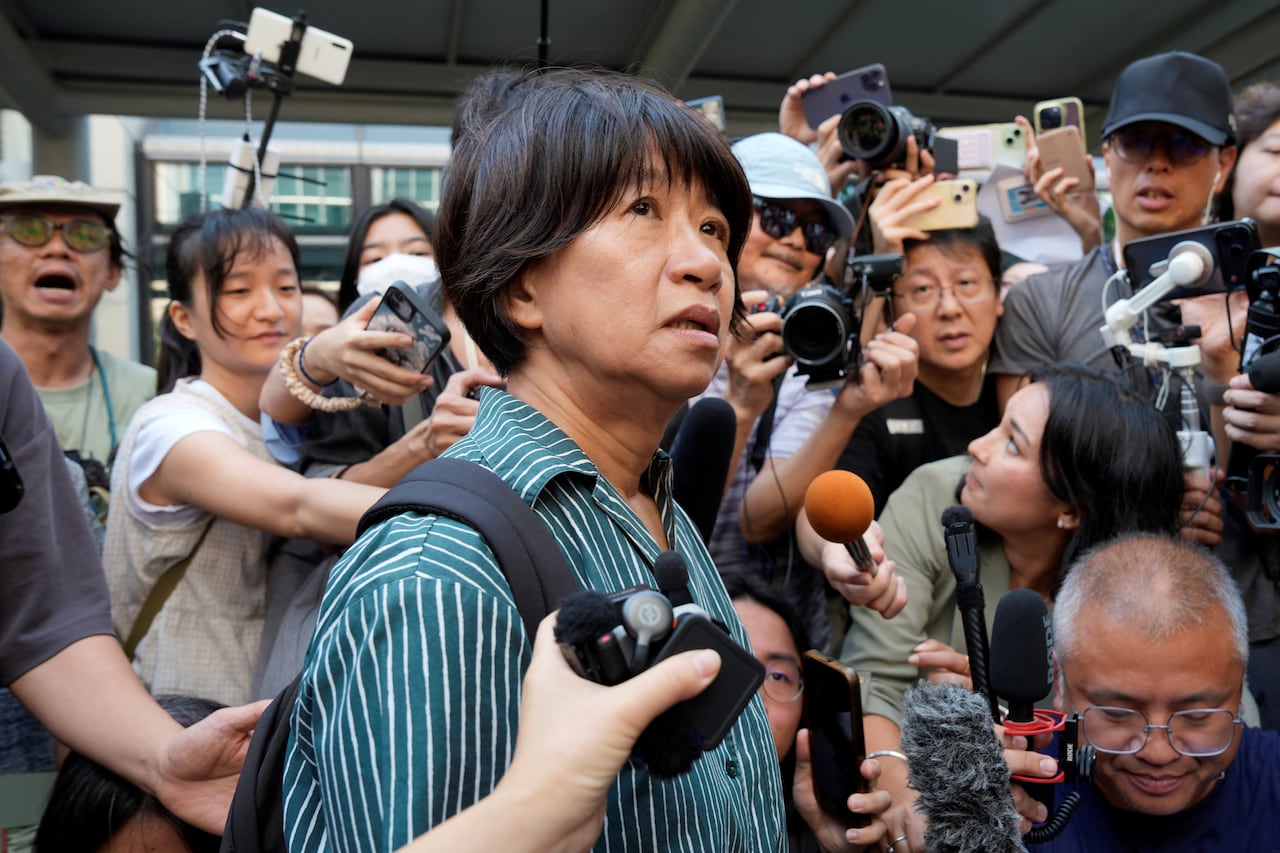
Elizabeth Tang, the wife of Lee Cheuk-yan, told reporters that Lee had been prepared for the worst and would appeal against the results. (Vernon Yuen/Reuters)
The three judges, appointed by the government, declared that the defendants had committed a serious crime. The court had previously determined that the long-standing demand of their organization to “end one-party dictatorship” indicated an intention to overthrow or undermine the leadership of the ruling Communist Party.
In delivering the sentences, the judges acknowledged that the case did not involve any violence or threats of violence and that the group never specified how or when they would achieve their goals. However, they emphasized that the defendants’ actions occurred in a turbulent social environment, which posed a heightened risk to national security.
The ruling maintained that the defendants were not being prosecuted due to their political beliefs.
“Even though the defendants recognized that their agenda of ‘ending one-party dictatorship’ might violate the constitution and the national security law, they continued to act defiantly after the law came into effect and actively promoted their cause,” the judges stated.