

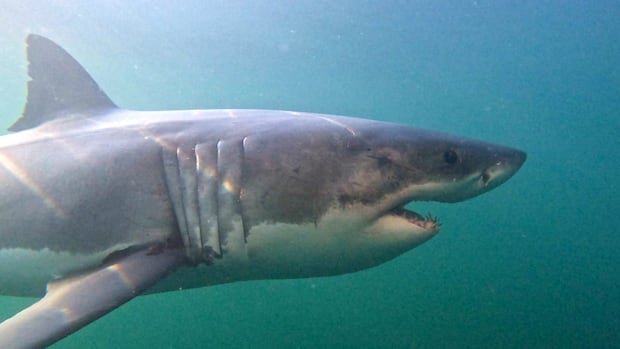

Countries worldwide that are home to sharks have started using drones to identify when these marine creatures approach public beaches. However, officials in Nova Scotia have stated that they currently have no plans to utilize this technology. Despite being aware of lifeguards in other countries, like Australia and the United States, employing drones for surveillance, Paul D’Eon, the longstanding director of the Nova Scotia Lifeguard Service, mentioned that they have not actively pursued adopting drones at this time.
The Department of Natural Resources, responsible for overseeing public beaches in the province, did not disclose any intentions of investing in aerial shark surveillance. Lynette Macleod, a spokesperson for the department, confirmed to CBC News that drones are not currently being used in the region.
During the summer months, the lifeguard service in Nova Scotia monitors 24 public beaches around the clock. This monitoring is crucial as great white sharks migrate to the warm waters of Nova Scotia annually during this period. Despite a marginal increase in shark sightings, D’Eon expressed that drones are not deemed necessary based on his 52 years of experience safeguarding Nova Scotian beaches, where no shark attacks have occurred. However, he noted that there has been a rise in beach closures due to shark sightings over the years.
While vigilantly observing factors that impact public safety, D’Eon stated that he does not currently recommend the province invest in drones. He mentioned that if circumstances change, they would reconsider exploring drone technology.
In contrast, the Australian state of New South Wales has been utilizing drones for beach monitoring since 2015. Following a series of shark attacks, the state government increased funding for drone patrols by $34 million in June 2026. Data revealed that within the first two days of the expanded drone program, lifeguards spotted sharks 73 times.
Drones are now operational year-round on 70 beaches in New South Wales, with plans to incorporate artificial intelligence for enhanced shark detection. Similarly, both New York State and the New York City Police Department have integrated a fleet of shark detection drones, with the state investing an additional $322,000 US in this technology earlier this summer.
At Martinique Beach in Nova Scotia, a recent shark sighting prompted a beach closure protocol lasting two hours. Bathing enthusiasts expressed that having lifeguard-operated drones patrolling above the water would enhance their sense of safety. Philip Skinder, head coach and director of the Pacific Lifesaving Club based in Vancouver, commended the use of funds for drone surveillance as an efficient and effective means to protect ocean-goers.
Despite concerns raised by some beachgoers following recent shark sightings, D’Eon advised individuals to stay safe by avoiding swimming during dawn and dusk, or near seals and active fishing areas.
Ultimately, while opinions on investing in drone technology for shark surveillance vary among residents and officials in Nova Scotia, the ongoing debate underscores the importance of prioritizing beach safety and exploring innovative solutions to mitigate risks.