

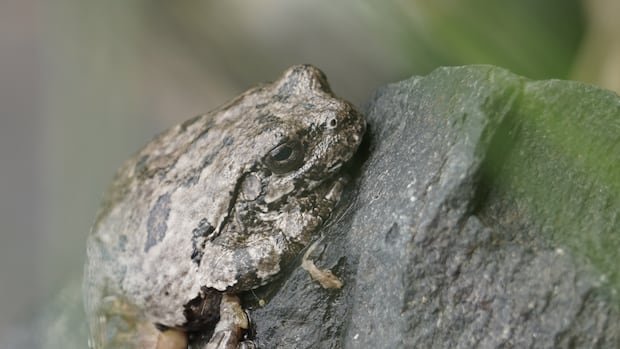

Observable symptoms of chytridiomycosis in frogs and toads include thickened skin shedding in pieces, respiratory and feeding difficulties, and a compromised immune system leading to systemic shutdown.
This lethal fungal infection, known as an “epidermal epidemic,” has been responsible for the extinction of numerous amphibian species globally.
Although not officially reported in Manitoba, it is believed to be widespread in the province, with the pathogen likely present but undetected due to limited surveillance.
Chytridiomycosis in frogs is caused by Batrachochytrium dendrobatidis, while in salamanders, it is caused by Batrachochytrium salamandrivorans, a pathogen that emerged in East Asia and has decimated local salamander populations in Europe.
Although not yet detected in North America, the threat of its introduction remains.
The origin of the frog and toad-infecting variant of the disease is uncertain, but evidence suggests its presence in Brazil and Asia for over a century before spreading globally, partly due to the exotic pet trade.
Chytridiomycosis has led to the extinction of over 90 species and population declines in more than 500 others, making it one of the deadliest infectious diseases among vertebrates.
Recent years have seen an increase in its prevalence in the U.S. and Canada.
Studies conducted in Alberta and British Columbia revealed a high prevalence of chytrid in frog populations, particularly affecting northern leopard frogs, which are endangered in parts of Western Canada and listed as a species of special concern in Manitoba.
The decline in leopard frog populations in Canada has been linked to chytrid, with historical evidence pointing to a significant decrease in Manitoba numbers five decades ago.
Although chytrid has not been confirmed in Manitoba, research suggests a potential risk to amphibians in the region, especially with changing environmental conditions.
Geographic modeling indicates wetland habitats in Manitoba could be conducive to the spread of pathogens, emphasizing the importance of proactive monitoring and conservation efforts.
Researchers at Brandon University are spearheading efforts to detect and mitigate the impact of chytrid on amphibian populations in Manitoba, aiming to prevent further declines.
The health of wetlands is crucial not only for amphibians but also for the overall ecosystem, highlighting the interconnectedness of wetland health, wildlife, and human well-being.
Efforts to inoculate young leopard frogs against chytrid have shown promising results, offering hope for the conservation and recovery of amphibian populations affected by the disease.
Continued research and proactive measures are essential to protect amphibians from the devastating effects of chytridiomycosis and prevent further species loss.