

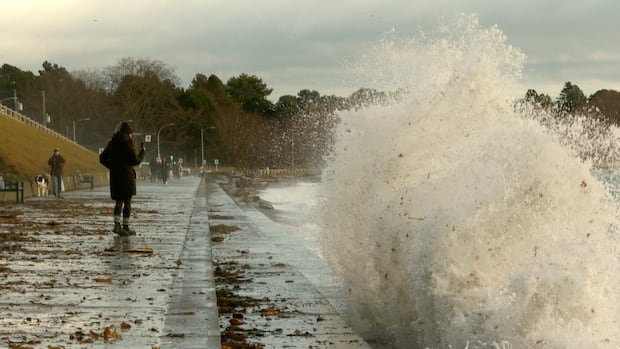

A massive underwater wave associated with this year’s El Niño weather system is progressing up the western coast of the Americas, sparking concerns among scientists regarding how climate change is amplifying the effects of this naturally occurring event.
Known as the Kelvin wave, this phenomenon is not surprising. However, occurring alongside human-induced climate change, which has already heightened ocean and atmospheric temperatures, raises additional concerns.
A smaller wave made its way to British Columbia earlier this summer, with another expected to reach the region within the next one to two weeks, as per Bill Merryfield, a research scientist at Environment and Climate Change Canada.
When these Kelvin waves hit the South American coast, they split and move along the American coasts, eventually reaching Canada. Sea-level data from Tofino on Vancouver Island demonstrates the impact of the previous Kelvin wave in June.
Instead of a tsunami-like surge, the Kelvin wave temporarily elevates sea levels, creating a broad, shallow bulge in the ocean surface. This phenomenon was described by University of California climate scientist Daniel Swain as a rise of about a foot.
The effects on the West Coast are most noticeable during king tides, especially high tides resulting from the combined gravitational pull of the sun and moon. When combined with sea-level rise from El Niño and potential storm surges, the impacts can be severe.
The compounding impacts of the Kelvin wave, amplified northward winds, winter storms, and climate change-induced sea-level rise and extreme weather could exacerbate coastal flooding and erosion. Past strong El Niños have caused widespread erosion on California’s beaches.
Authorities in California are taking precautionary measures by placing emergency sand on beaches, expecting the Kelvin wave to raise water levels by six to 12 inches, according to the Associated Press.
Merryfield cautioned that the effects of the Kelvin wave and El Niño could extend beyond the current season. During El Niños, some of the stored heat in the oceans is released into the atmosphere, potentially leading to 2027 becoming the warmest year on record by a significant margin, in line with warnings from various climate research entities and scientists.