


At twilight, under a greyish hue from a recent solar eclipse in northern France, numerous individuals gathered at a bus stop along a highway, many carrying vibrant orange life vests. This group, comprising women and young children, revealed they had been residing in nearby woods for months, waiting for a favorable opportunity to board a boat and traverse the English Channel. However, they noted encountering challenges as police interventions and tear gas deterred their crossing attempts.
The coastal region spanning 40 kilometers between Dunkirk and Calais has long served as a transit point for migrants navigating through Europe. Recent trends indicate a rise in migrant boat crossings across the Channel, despite an overall decrease in such activities. These developments coincide with heightened discussions on European migration, particularly following a surge of migrants storming the Spain-Morocco border in Ceuta in late July.
British politicians, notably Nigel Farage from the Reform UK party, have suggested deploying the Royal Navy to return migrants to France, although former Navy officials have deemed this proposal unfeasible. Prime Minister Andy Burnham visited Dover in early August, emphasizing efforts to curb boat crossings while advocating for safer migration routes to combat human trafficking.
The increased funding for French police operations, totaling £662 million ($1.2 billion Cdn), has transformed Calais into a permanent border zone. Authorities are cracking down on departures and dismantling informal settlements, forcing migrants to evade detection in forests, dunes, train stations, and beaches.
Despite fewer migrant crossings compared to the previous year, volunteers from organizations like Calais Appeal state that deterrence measures do not diminish the number of individuals attempting the perilous journey. Migrants are resorting to riskier and longer routes, resulting in overcrowded boats and heightened dangers during Channel crossings.
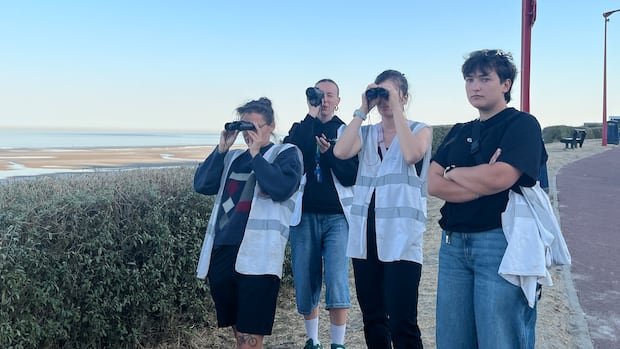
Humanitarian efforts by citizen groups and volunteers have become essential in supporting stranded migrants along France’s northern coast. These groups provide aid to individuals left destitute after failed crossing attempts, emphasizing the inadequacy of government support in rescue operations.
Migrants, driven by a quest for safety, continue to endure arduous journeys. Mohammed, a migrant from Gaza, shared his harrowing experiences fleeing conflict zones and oppressive regimes in search of sanctuary in the UK. The polarizing discourse on immigration in the UK has prompted successive governments to adopt stringent policies, fueling anti-immigrant sentiments and sparking protests.
Local activists in France, such as those with Utopia 56, face challenges from far-right groups seeking to intimidate migrants and aid organizations. Despite allegations of encouraging migration, these activists focus on raising awareness about the risks involved in the perilous journey across the Channel.
Efforts to prevent migrant boat departures have garnered support from local officials like Mayor Stéphane Pinto of Ambleteuse, who views such interventions as crucial in saving lives. Tragic incidents, such as fatalities during Channel crossings, underscore the urgent need for international collaboration in addressing the complex challenges posed by migration flows.
The migration issue, intertwined with conflicts and environmental crises, demands a comprehensive and coordinated approach at the global level to find sustainable solutions. Mayor Pinto emphasizes the necessity for governments and international bodies to confront the escalating migration crisis head-on to ensure a more secure and humane future.