


Most of the prominent leaders were absent from the yearly roundtable meeting of northeastern U.S. governors and Canadian premiers, according to a political analyst at the University of Prince Edward Island. Don Desserud, the head of political science at UPEI, noted that the missing leaders reflect the ongoing cross-border trade tensions.
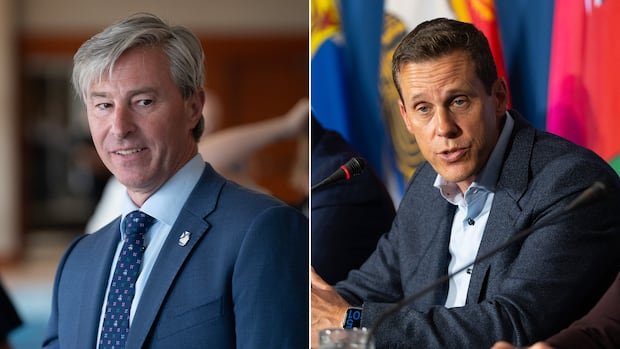
Canadian Premiers Tim Houston of Nova Scotia and Rob Lantz of P.E.I. were the primary Canadian representatives at the 47th annual New England Governors and Eastern Canadian Premiers conference, which concluded recently. Vermont Governor Phil Scott hosted the event, with only one out of six state governors, including Scott, attending in person, while the others sent proxies.
Desserud suggested that the current focus of the premiers on practical solutions might have led to disinterest in such gatherings given the strained relations between the two nations. He emphasized that the significance of these meetings has become more symbolic than practical, with a shift towards a more practical approach among the current generation of premiers.
Meanwhile, New Brunswick Premier Susan Holt remained in the province to prioritize local matters, with her trade policy head Serge Breau attending in her place. Details were scarce regarding the absence of Newfoundland and Labrador Premier Tony Wakeham and Quebec Premier Christine Frechette, who were represented by officials from their respective offices.
The recent decrease in attendance at the conference over the years has been notable, with fewer high-level representatives participating in the discussions. The ongoing trade war between Canada and the U.S., initiated by President Donald Trump, has added complexity to the relationship, with new tariffs planned to come into effect soon.
Despite the challenges, Governor Scott acknowledged the importance of maintaining strong connections between the two countries, emphasizing the role of governors and premiers in fostering cooperation. During the conference, joint opportunities in clean energy and advanced manufacturing were explored, along with discussions on energy security and economic growth.
Desserud, who has expertise in Maritime politics, highlighted the value of participation in such conferences, even amidst current tensions. He emphasized the importance of maintaining connections for future collaborations beyond the current trade disputes.
In conclusion, the conference provided a platform for regional leaders to discuss shared interests and strategies for collaboration, despite the prevailing trade challenges between Canada and the U.S.