

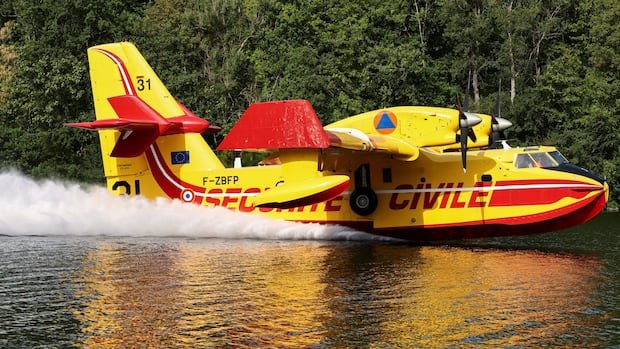

As wildfires continue to ravage Canada, the United States, and Europe, there is mounting pressure on the manufacturer of Canadair “Super Scooper” water bombers to ramp up production. De Havilland, based in Calgary, has decided to restart the production of Canadair after acquiring the water bomber program from Bombardier in 2015.
The Canadair water bombers, renowned worldwide for their firefighting capabilities, are meticulously crafted by hand in Calgary using components from various parts of the country. The revival of the production line, initiated in 2022, is progressing well, with the first two aircraft on track to be finished and delivered by early 2028.
With current shortages and aging fleets, Canadian premiers and European leaders are eager to secure these aircraft. The Canadair, originally developed in the 1960s, was specifically designed for combating large wildfires in the Canadian wilderness. Its unique ability to scoop up thousands of liters of water swiftly from lakes, rivers, and oceans makes it a valuable asset in firefighting operations.
Concerns about insufficient operational Canadairs have surfaced in France and Spain, prompting criticism from opposition politicians. Provincial leaders, like Manitoba’s Wab Kinew, have expressed frustration over the lack of new water bombers, emphasizing the urgent need for more firefighting resources.
De Havilland is under significant pressure to meet the soaring demand for Canadair water bombers. The company is contemplating establishing a second production line to address the high demand. Alberta Premier Danielle Smith is working with provincial counterparts and the federal government to facilitate a firm order from Ottawa, which could pave the way for the construction of a second production line.
Currently, De Havilland has orders for 38 water bombers, with delivery timelines extending to 2032-2033. The production process involves numerous parts, with the majority sourced from Canada, some of which date back to the 1960s.
Aviation expert John Gradek underscores the necessity for additional production lines to meet the global demand for Canadairs. The escalating need for firefighting aircraft is driven by worsening wildfire scenarios worldwide due to climate change.
The potential emergence of foreign competitors in the firefighting aircraft market poses a threat to Canadian manufacturing jobs. To preserve its position as a leader in water bomber technology, De Havilland must respond swiftly to the growing demand.
Recommendations from a Senate report highlight the importance of establishing a national fleet of modern firefighting aircraft to combat wildfires effectively in Canada. While planes and helicopters play a crucial role in firefighting efforts, they are just one aspect of a comprehensive strategy that includes prevention and mitigation measures.
The federal government is committed to enhancing the country’s capacity to respond to wildfires and is collaborating closely with provincial and territorial authorities to address the escalating impacts of wildfires.