

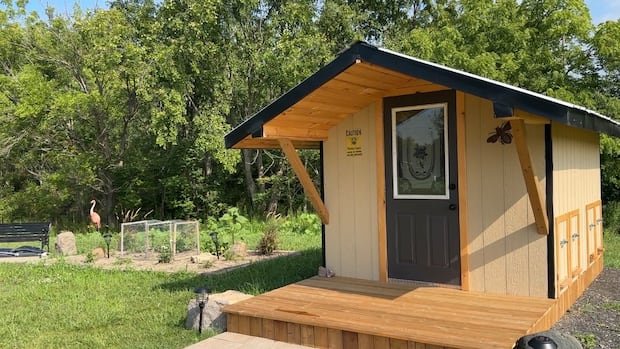

Half a million bees are creating a soothing atmosphere at a farm in southwestern Ontario, offering visitors a unique way to unwind and alleviate stress. At Diana Graham’s 28-hectare farm in the Comber area, she operates Bees and Bloom Wellness, where clients can experience bee bed therapy inside a cozy hut. Underneath two wooden beds are four beehives, separated from the clients by screens. Advocates of this therapy, including Graham, claim it can help reduce anxiety and stress levels, although scientific evidence supporting its efficacy is limited.
Graham, known as ‘the queen bee’ among her acquaintances, emphasized the therapeutic benefits of sleeping surrounded by bees. Visitors have reported feeling amazed and experiencing improved breathing after exposure to bee pheromones. The setup is designed to ensure the safety of clients from bee stings. According to Graham, the bees’ pheromones can have positive effects on the immune system, lungs, and mental well-being, aiding in alleviating anxiety, depression, PTSD, sleep disorders, and overall health.
The cabin is infused with the comforting scents of honey and beeswax, enhancing the wellness experience. Similar bee bed therapy centers can be found across Canada. Visitors who have spent time at Graham’s farm shared positive feedback, expressing how the experience helped them relax and unwind.
Christine Brady, a visitor from Petrolia, praised the therapy and expressed her delight at having access to a bee bed facility in Ontario. Another visitor, Annette Bourassa from Barrie, Ontario, found the experience incredible and highlighted the relaxing and therapeutic effects of the bees’ hum. Clients can opt for a 60-minute session at Graham’s farm, with pricing ranging from $85 for one person to $300 for a group of four to six individuals.
The concept of bee bed therapy originated in Ireland, where Paul O’Neill and Anton Tovarnitskyi established the first commercial bee bed houses. O’Neill shared that this form of therapy, which involves lying on top of an active beehive, has gained popularity in Europe and has attracted interest globally. Despite anecdotal reports of relaxation benefits, the scientific backing for bee bed therapy’s mental health benefits remains scarce.
Researcher Yanki Tandircioglu from Turkey conducted a study on the effects of bee bed therapy on anxiety levels. The experiment involved participants exposed to bee beds or bee buzzing sounds, with results showing a reduction in anxiety levels. While acknowledging the lack of substantial scientific evidence, Tandircioglu highlighted the potential of bee bed therapy for relaxation and stress reduction.
In conclusion, bee bed therapy offers a unique and potentially beneficial approach to relaxation, drawing on the calming effects of bees and their surroundings. As interest in this unconventional therapy grows, further research and exploration are warranted to better understand its therapeutic effects on mental well-being.