

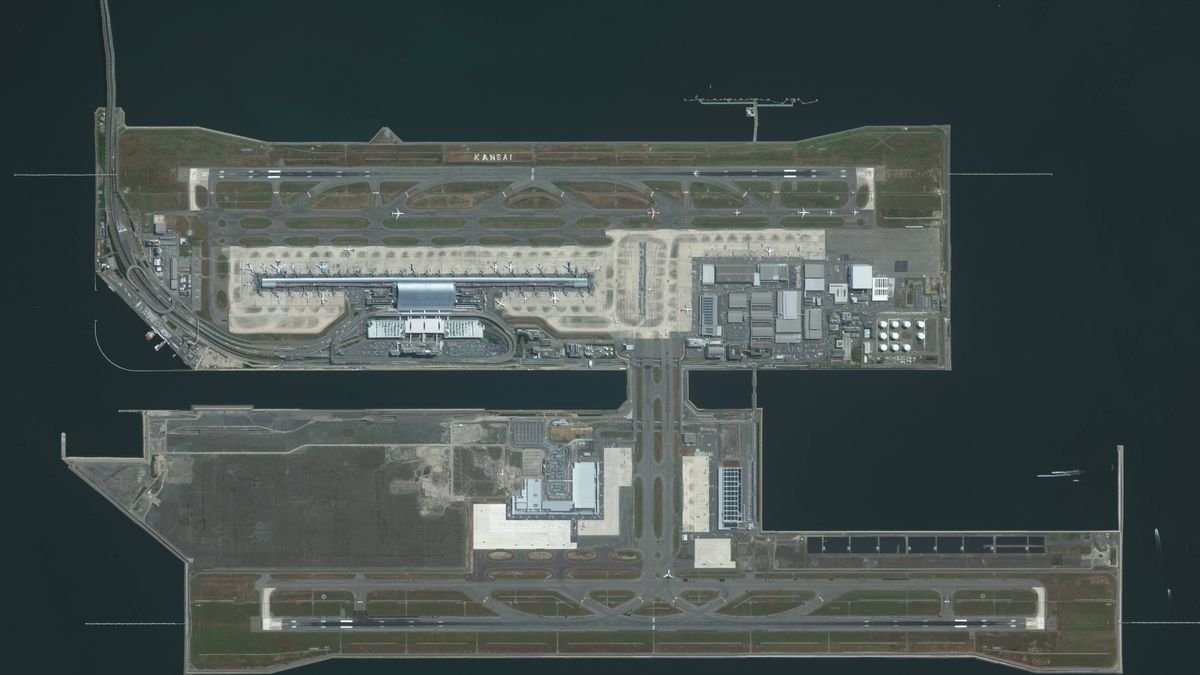

A renowned airport that holds multiple world records is at risk of being submerged underwater in the next century.
Kansai International Airport, located in Osaka Bay, Japan, was constructed on a foundation of alluvial clay, a soft material expected to settle gradually over time. Despite opening to passengers in 1994, predictions of a 13-foot subsidence over 50 years were greatly surpassed, with the airport sinking 42 feet.
The airport has been bustling with air traffic, handling 169,774 flights and accommodating 25.9 million travelers in 2024. Engineers were surprised by the rapid sinking rate compared to their initial estimates.
Efforts to counter the sinking include the installation of sand drains, but the descent persisted beyond expectations. To mitigate the issue, an extra £112 million was spent to fortify the seawall, slowing down the subsidence rate.
Projections suggest that if the current sinking pace continues, the airport could dip below sea level by 2056, making it vulnerable to storms and seismic events. Previous incidents, such as Typhoon Jebi in 2018, have caused runway flooding and disruptions.
Despite these challenges, Kansai International Airport has gained recognition for its impeccable baggage handling record, never misplacing luggage in its three-decade operation. This achievement led to accolades like the ‘World’s Best Airport for Baggage Delivery’ at the prestigious Skytrax World Airport Awards.