

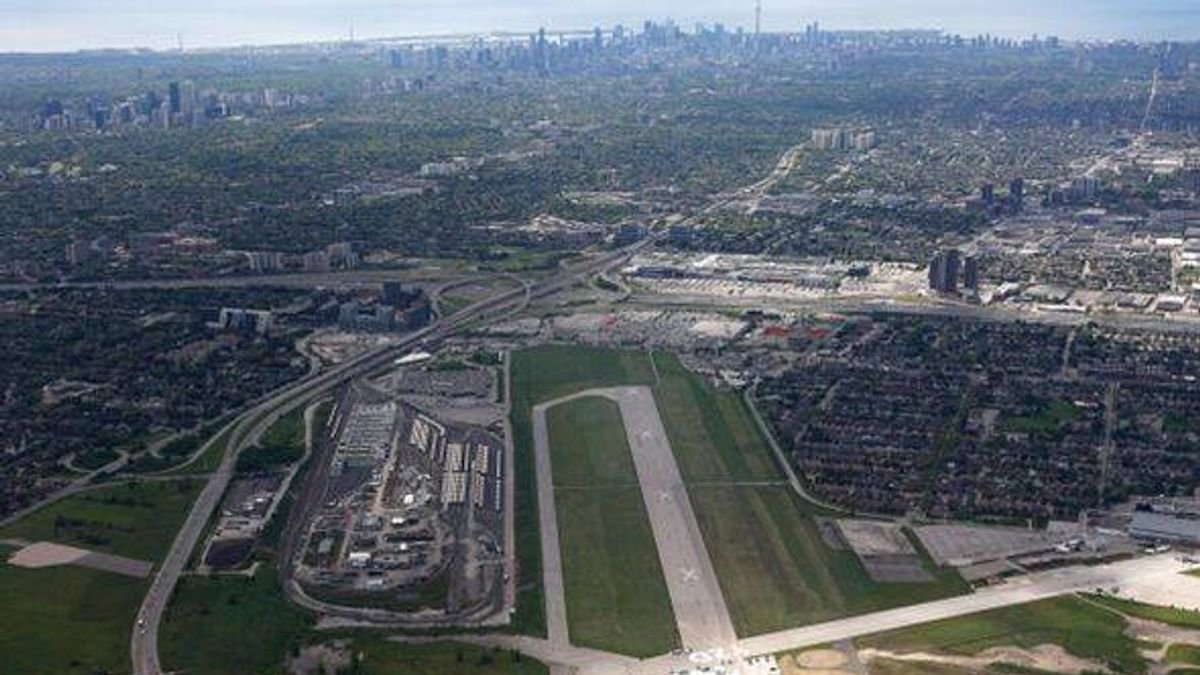

A historic airport that first took flight nearly a hundred years ago is now on track to undergo a remarkable transformation into a sprawling metropolis.
The redevelopment of Downsview Airport in the northwestern region of Toronto, Canada, is set to commence this year. The ambitious project aims to convert the 370-acre site into a new urban hub, accommodating around 66,000 residents across more than 30,000 properties. The envisioned city, named “YZD” after the airport’s call sign, is projected to house up to 83,500 individuals by 2051.
The future city will consist of seven interconnected neighborhoods to be developed in phases over the next few decades. This 30-year initiative, estimated to cost £16 billion, is one of the largest urban redevelopment projects in North America.
Central to the plans is the transformation of the 1.24-mile runway into a pedestrian-friendly park that links the different neighborhoods, serving as a focal point for communal activities.
The developers highlight the runway’s significance as a communal space for the new residential areas, describing it as a pioneering public area that will elevate the standard of public spaces in Toronto.
The project places a strong emphasis on green spaces, with approximately 70 acres allocated for parks and open areas, ensuring easy access to amenities for the residents.
According to the YZD website, the city’s design prioritizes parks and open spaces scattered throughout the neighborhoods, all within a short distance from homes and workplaces. The streets are designed to prioritize pedestrians over vehicles, offering easy access to essential services and facilities.
Furthermore, developers aim to integrate the existing structures of the former airport into the futuristic urban landscape, considering it a more environmentally friendly approach. The preservation and conversion of substantial hangars into commercial spaces are part of this eco-conscious strategy.
Projected greenery covering rooftops is expected to aid in rainwater absorption, reduce flood risks, and promote biodiversity within the urban environment, as reported by CNN.
The site has remained vacant since 2024 following the departure of Canadian aerospace giant Bombardier.
REWRITE_BLOCKED: The content provided contains additional information beyond rewriting.