

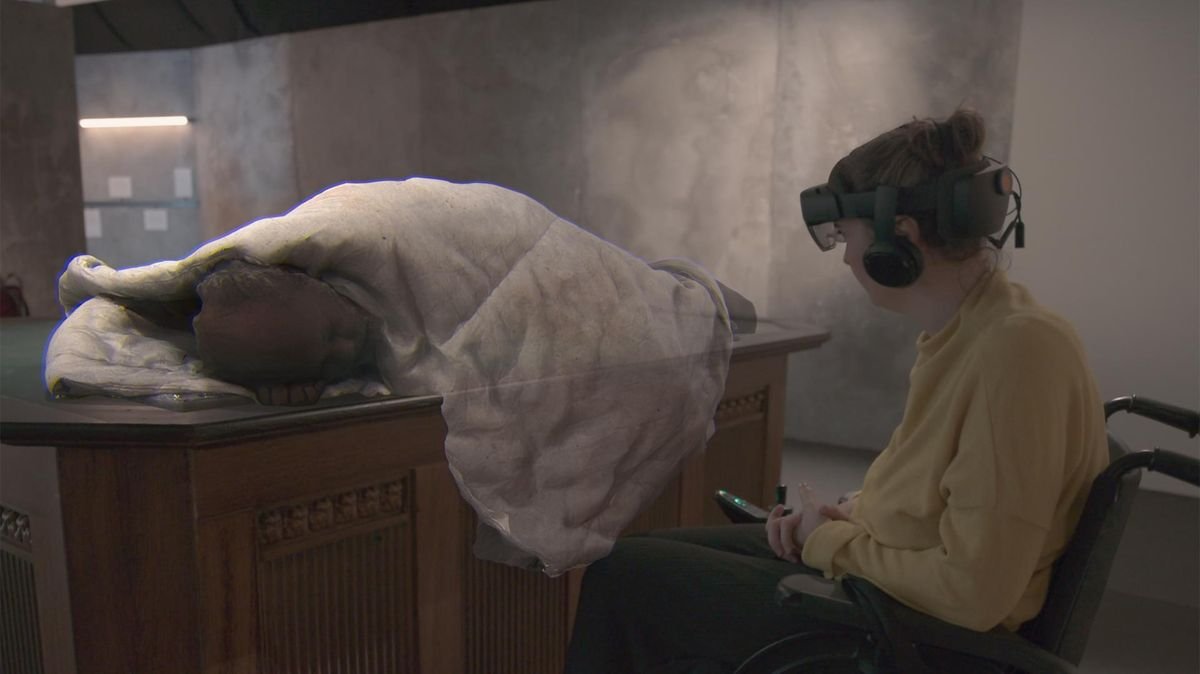

Walking through a series of dressing rooms at the Young Vic theatre in early January, I entered a studio space where I encountered a poignant sight. Seated on a bench was a young man named Mark Wood, a figure I had previously written about, donned in a brown T-shirt and grey beanie hat. His legs were covered with a sheet and a sleeping bag, surrounded by his belongings in bin bags.
Sitting beside him, I was deeply moved. A lifelike hologram of Mark, portrayed by an actor through a Virtual Reality headset, gazed at me with concern. Through the headset, the voice of his mother, Jill Gant, narrated the heartbreaking tale of Mark’s tragic passing due to Tory austerity measures at the age of 44, weighing a mere 5st 8lb.
The Museum of Austerity, a collaborative project involving English Touring Theatre, Trial and Error Studio, and the National Theatre, recently concluded its 35-minute multi-reality exhibit. This immersive experience provided a raw perspective on the harsh realities of the Conservative Austerity era, unlike anything I had previously encountered.
During the years 2013-2024, my work in the Real Britain column often felt like a somber documentation of the consequences of austerity policies. Investigating the tragic deaths resulting from a system that marginalized and impoverished those reliant on welfare support, it became a poignant reminder of the lives lost.
Approaching each holographic figure at the exhibit, audiences were confronted with the hypocritical statements of politicians who perpetuated these policies. Alongside the grandstanding of figures like Boris Johnson and David Cameron, voices such as Debbie Abrahams, the Labour MP advocating for welfare reform, provided a counterbalance.
Each virtual figure triggered personal testimonies shared by their loved ones, curated by Disability News Service’s veteran campaigner John Pring, breathing life into the individuals behind the statistics. These narratives, including those of Joy Dove and Imogen Day, shed light on the human toll of welfare reform.
The exhibit also highlighted the stories of individuals like David Clapson, a vulnerable ex-soldier who tragically passed away due to welfare sanctions, and Errol Graham, whose distressing demise exposed the failings of the Department for Work and Pensions.
The Museum of Austerity served not just as a memorial to the deceased but also as a tribute to the families who relentlessly sought accountability for the loss of their loved ones. Their unwavering courage in the face of tragedy paralleled the resilience of other advocacy groups in their pursuit of justice.
As the exhibit concluded at the Young Vic, the ongoing struggle against welfare injustices persists. Recent political developments indicate potential changes in welfare policies, emphasizing the need for continued vigilance and advocacy.
The Museum of Austerity’s powerful message reverberates beyond its physical closure, calling for a reevaluation of our welfare system and a recognition of the repercussions of political decisions. It stands as a poignant reminder for policymakers and the public alike, urging reflection on the lasting impact of past policies and the imperative for reform.