

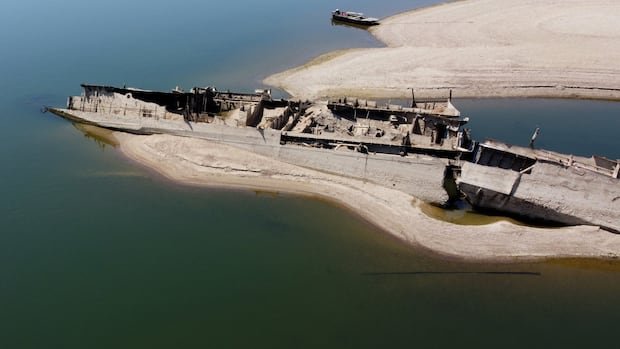

The Danube River is revealing Nazi German warships submerged during World War II as water levels drop due to the scorching heat and drought affecting Europe this summer. The fifth heatwave since May is forecasted to hit western Europe, with temperatures nearing 40 C in Spain, France, and Italy. The Copernicus climate monitoring service of the European Union confirmed that June and July were the hottest on record in western Europe, leading to approximately 25,000 heat-related deaths.
The intense heat has sparked devastating wildfires and caused water levels in important waterways like the Danube to reach record lows. Climate scientists warn that these exposed wrecks serve as a visible reminder of the worsening effects of fossil fuel-induced climate change, which is exacerbating heatwaves, droughts, and wildfires across Europe. Richard Allan, a climate scientist at the University of Reading, emphasized that the current extreme weather is just a glimpse of the broader impacts of global warming.
Historians estimate that up to 200 warships were scuttled by the Nazis near the Serbian city of Prahovo in September 1944 to halt advancing Soviet forces. The drying Danube has also unveiled various artifacts, including a German military motorcycle in Hungary, an unexploded British bomb in Slovakia, and ancient mammoth remains in Bulgaria. The dwindling water levels have raised concerns for countries along the Danube, necessitating measures like restricting water use for irrigation and managing nuclear power plant operations.
The rising temperatures in Europe are a stark contrast to historical averages, with this year experiencing a significant increase in surface air temperatures. Copernicus reports that climate change is intensifying heatwaves and droughts, leading to extreme weather patterns. Climate experts warn that the current situation is a precursor to even more severe conditions in the coming years if greenhouse gas emissions continue unabated.
The emergence of a potential super El Niño in the southern Pacific Ocean could further exacerbate global temperatures in the following year. Allan stresses that the effects of climate change will continue to escalate unless significant action is taken to reduce greenhouse gas emissions. The ongoing heatwaves and wildfires in Europe highlight the urgent need for proactive measures to combat climate change and protect natural resources.
The situation along the Danube River serves as a clear example of the escalating impacts of climate change, with experts urging immediate action to mitigate its effects and safeguard the environment for future generations.