

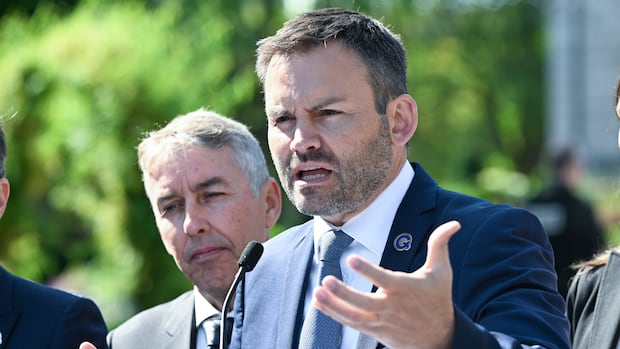

Parti Québécois Leader Paul St-Pierre Plamondon faced criticism from opponents on Friday after announcing that the anticipated cost of a sovereignty referendum would be no less than $130 million.
While three of the five campaign leaders contended that there are more effective ways to allocate these funds, the sovereigntist left-wing party Québec Solidaire backed the proposed expenditure.
In a discussion with The Canadian Press, St-Pierre Plamondon outlined the expenses associated with preparing for and conducting the referendum in 2029 or 2030, contingent upon his party achieving governmental power.
The budget for the referendum comprises $20 million earmarked for studies and consultations during the initial years of a Parti Québécois administration. According to the party leader, hosting the referendum in 2029-30 would incur a cost of $110 million.
St-Pierre Plamondon acknowledged that the total could surpass this figure due to “unexpected expenses.”
“People will have their say, but we won’t apologize for existing in a democracy and for seeking public input if we reach that stage,” he remarked.
The party’s budgetary estimates for the referendum will be included in the financial framework he intends to unveil on September 15, coinciding with the first debate among party leaders in a provincial election campaign that concludes when Quebecers vote on October 5.
Leaders Critique Proposal
Christine Fréchette, head of the Coalition Avenir Québec, indicated that St-Pierre Plamondon’s proposal lacked essential figures. She claimed he did not reveal potential costs that could arise post-referendum.
“The Parti Québécois states that the cost of organizing a referendum is $130 million. What about the expenses in the first year of a sovereign Quebec? They are completely silent on that,” she noted.
Fréchette, who has refrained from disclosing her voting intention in a sovereignty referendum, identified herself as an “autonomist” on Friday, pledging to advocate for Quebec’s interests within Canada.
“That’s $130 million that could genuinely be invested elsewhere,” she remarked.
Quebec Liberal Leader Charles Milliard characterized the proposed expenditure as a misallocation of resources during a separate press conference.
“I can tell you how we could utilize $130 million. We could provide nearly one million hours of home care. We could likely construct three elementary schools and 1,300 non-market housing units,” he stated.
Conservative Leader Éric Duhaime was also quick to denounce St-Pierre Plamondon’s proposal, labeling it “unacceptable” to consider such expenses amidst ongoing high living costs.
“Regrettably, the Parti Québécois seems to operate on a different planet,” Duhaime commented.
“He previously indicated he did not want a referendum in the first three years. Now, we learn that during those three years, they intend to allocate funds to persuade us to vote ‘Yes’ in the fourth year when he enforces his referendum,” he added.
Referendum on the Horizon for PQ
St-Pierre Plamondon has asserted that his party would conduct a referendum on Quebec sovereignty after U.S. President Donald Trump vacates office, regardless of whether a majority or minority government is formed.
In response to this criticism, St-Pierre Plamondon defended his referendum budget, stating that general elections in the province typically cost around $110 million.
He also argued that Quebec’s independence would yield long-term savings.
“The objective is to eliminate federal waste that duplicates our efforts and loses money like no other, costing us billions,” he said.
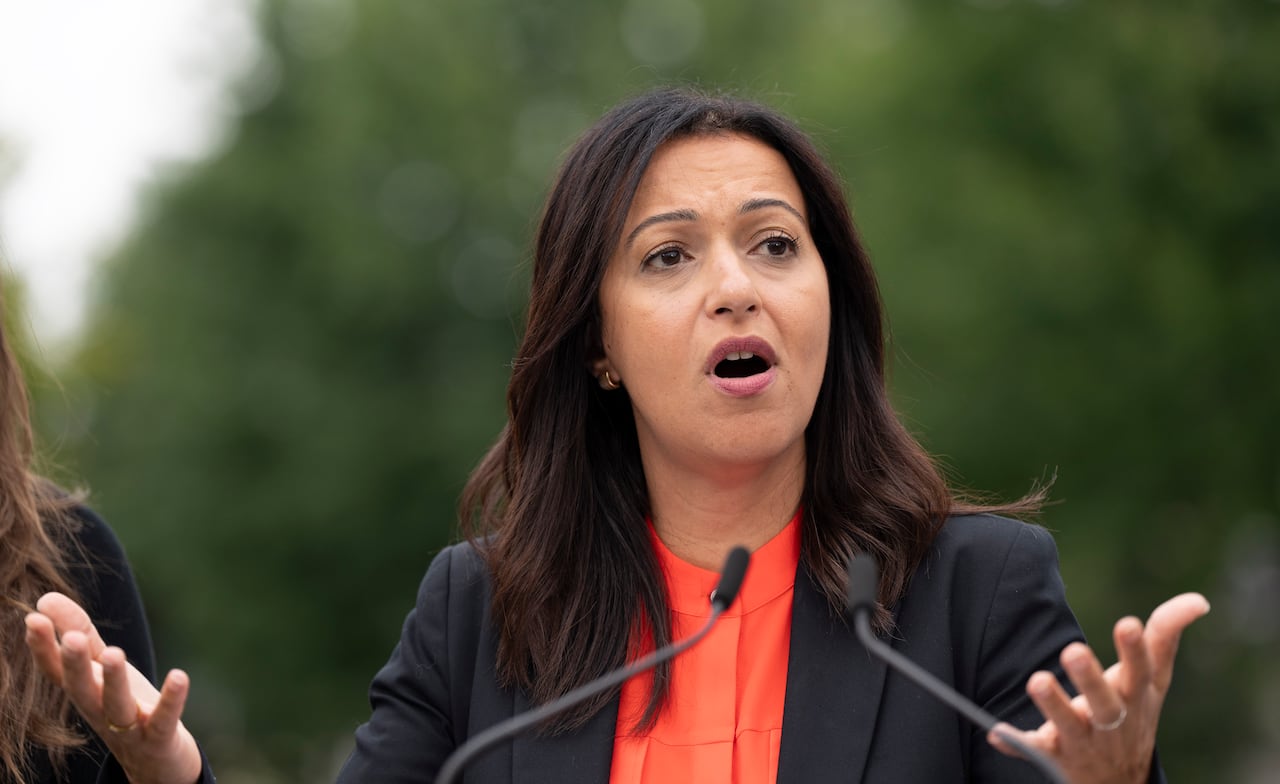
More public consultations needed, says Québec Solidaire co-spokesperson Ruba Ghazal. (Christinne Muschi/The Canadian Press)
Also campaigning, Québec Solidaire co-spokesperson Ruba Ghazal defended the necessity for a comprehensive consultation regarding Quebec sovereignty.
“For us as a [sovereigntist] party, it is crucial to conduct a large consultation — with First Nations, with individuals who may fear being part of an independent country, with the anglophone community, and with the broader society,” she stated.
She mentioned that her party has allocated $220 million for an assembly responsible for drafting a new Quebec constitution, which would be central to a sovereignty referendum.
Establishing a New Independence Minister
If he becomes premier on October 5, St-Pierre Plamondon informed The Canadian Press that he would designate a minister in charge of the independence process, who would take over from the current minister of Canadian relations.
“We have no specific plans regarding the size or number of employees per ministry, but… we can assure there will be no increase in the size of that particular ministry,” he noted.
The PQ leader added that the “intergovernmental relationship with Ottawa is also becoming part of the independence initiative.”
Since the commencement of the election campaign, the PQ’s adversaries have been pressing for clarity regarding the potential costs of a referendum. When prompted by The Canadian Press, he opted to disclose the financial details.
“Part of my opponents’ strategy is to vilify consulting the public about their future by labeling it as outrageous,” he remarked. “However, overall, we aim to reduce historic waste… so I believe people will assess our political agenda in its entirety.”
St-Pierre Plamondon is confident that his party’s commitments have been adequately budgeted, asserting, “this represents a more than cautious budgetary strategy.”
The PQ leader also indicated that the financial framework he will soon present will be “the budgetary framework for a Quebec in the present context.”
It will not, for instance, factor in the promise to establish a Quebec army following a successful “Yes” vote in the referendum.
“Quebec’s financial framework will evolve after Quebec achieves independence,” he stated.