

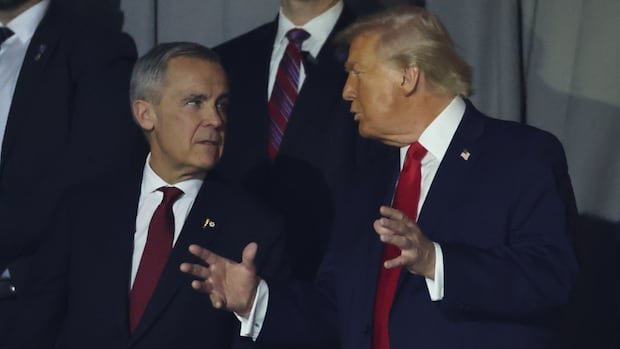

In the heart of Toronto, individuals are readily vocal about their concerns regarding politics. Tonya Facey expressed how prevalent politics is in daily life and the stress it brings. Jamie Haynes, visiting from St. John’s, also shared his worries, particularly about ongoing conflicts involving Donald Trump and Canada.
Various political events such as the U.S. trade war, an Alberta referendum, and the Quebec election, along with global disputes, have been identified as potential triggers for stress according to researchers. The impact of political decisions on people’s daily routines and disagreements leading to conflicts with others are additional sources of anxiety.
Political stress has become a significant area of study, gaining momentum following the 2016 U.S. presidential election. In Canada, political scientists, psychologists, and mental health experts are delving into the effects of this stress on individuals’ well-being. Amanda Friesen, a Canada Research Chair in Political Psychology at Western University, initiated the Body Politics Lab to explore how individuals react emotionally and physically to politics.
A study conducted on 81 undergraduate students equipped them with a device to monitor their physiological responses while engaging with political content on social media. The results highlighted that individuals tended to feel negative emotions after viewing political content, leading to increased engagement despite the negative impact.
Friesen mentioned that understanding the stress factors in politics and their implications on health and democracy is crucial. Balancing personal health with democratic engagement is a current research focus. Striking a healthy balance between staying informed and maintaining well-being is essential, as political involvement is vital for a flourishing democracy.
Noah Vanderhoeven, a researcher at the Body Politics Lab, emphasized the importance of addressing political stress through citizen engagement and political action. Dr. Allison Crawford, a psychiatrist at the Centre for Addiction and Mental Health, noted an increase in individuals seeking support due to political stress, manifesting as sleep disturbances, feelings of overwhelm, and helplessness.
Recognizing symptoms and seeking support from trusted individuals are recommended steps in managing political stress. Crawford advised controlling news consumption and social media exposure to reduce stress levels. Recent headlines on the trade war with the U.S. have exacerbated political stress levels in Canada, particularly with uncertainties surrounding the impacts of the conflict.
Amid these tensions, individuals like Amélie Valois expressed concerns about the implications of political turmoil on everyday life, underscoring the pervasive nature of political stress.