

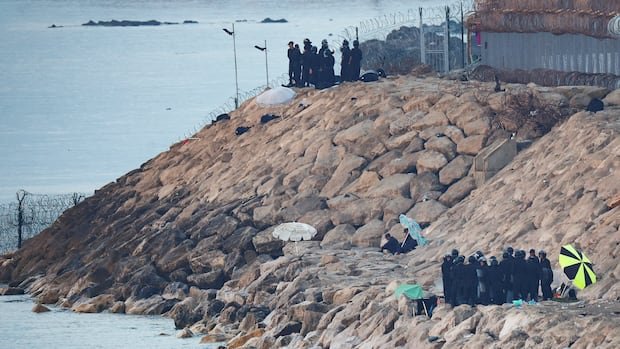

Moroccan authorities apprehended over 100 individuals on Saturday as they attempted to enter Ceuta, a Spanish enclave in North Africa, amidst heightened security following social media calls for another mass migrant crossing. This incident occurred after a surge of more than 72,000 migrants entered Ceuta two weeks ago, leading to tensions within the European Union and driving anti-immigration sentiments among far-right groups globally. Tragically, at least 96 people lost their lives in the previous attempt to reach European territory.
The detainees, comprising 109 migrants from sub-Saharan Africa and two Moroccan nationals, were captured in or near Fnideq, a Moroccan town facing Ceuta, as reported by a source in Morocco’s Interior Ministry to Reuters. Moroccan police utilized tear gas to disperse migrant groups congregated on hills close to the border, with subsequent sightings of law enforcement personnel, some in riot gear, returning from the vicinity.
Meanwhile, in Ceuta, Spanish forces guarded supermarkets, while police maintained a strong presence on the city’s streets, which were notably quieter compared to the aftermath of the previous mass crossing. Madrid has bolstered security by installing a maritime barrier and deploying an additional 500 police officers from mainland Spain, bringing the total forces in Ceuta to over 1,600, according to the Interior Ministry.
Interior Minister Fernando Grande-Marlaska affirmed the commitment to restoring order and averting future incidents similar to the events of July 30 by deploying necessary resources promptly. Approximately 5,000 migrants were still in Ceuta, with many seeking refuge on El Trampolin beach amid scorching temperatures.
Authorities in Morocco and Spain have ramped up security measures to deter further border breaches, including strengthening border controls, implementing road checkpoints, and restricting travel from various cities. Despite these efforts, some migrants have managed to evade security checks by taking alternative routes through mountainous terrain towards Fnideq.
The recent mass border crossings were reportedly organized events, with individuals gathering in Fnideq to cross together for solidarity and safety in numbers. Young migrants who made the perilous journey advised against further attempts, highlighting the risks and hardships involved in such endeavors. The authorities have reiterated their stance on returning irregular migrants to Morocco and preventing unauthorized stays in Ceuta or mainland Spain.
Overall, the situation remains tense as both Morocco and Spain grapple with the challenges posed by irregular migration and seek to prevent further breaches of their borders.