

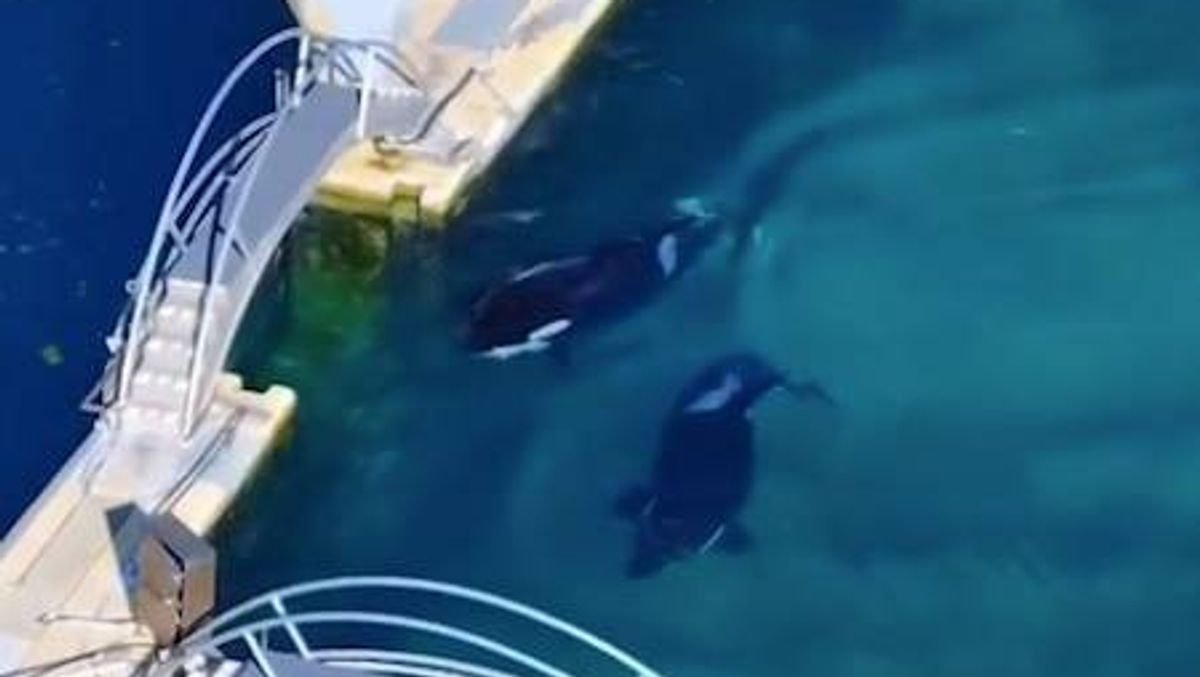

The last two orcas held in captivity in France are facing a grim future as activists warn of potential tragedy due to the government’s inaction towards the abandoned marine park. Wikie and her son Keijo, the remaining killer whales in France, have been left to languish in a deteriorating tank at Marineland Antibes since its closure earlier this year. With their once lively environment now desolate and neglected, the orcas endure a life devoid of stimulation, yearning for the lost connections with their deceased family members.
While a minimal staff tends to their basic needs, the orcas have been forgotten by the public that once flocked to see them perform. In the same decaying park, a dozen bottlenose dolphins also face an uncertain future. Pressure from the Cetacean advocacy group TideBreakers has been mounting on the French government to intervene and rescue these animals before it’s too late.
The closure of the park came after years of campaigning by various animal protection organizations, but a standoff between French officials and the park’s management has hindered progress in relocating the cetaceans. New legislation prohibits entertainment shows involving whales, dolphins, and porpoises, setting a deadline for Marineland to find a new home for the animals by December 2026.
Despite proposals to move the orcas to Japan or Canada being rejected, a potential transfer to a European sanctuary is being considered. The French government continues to explore alternatives, while activists emphasize the urgent need to act swiftly. With concerns over the orcas’ deteriorating conditions, TideBreakers stress that time is of the essence for Wikie and Keijo, who have already endured significant losses in captivity.
In a recent development, the French government has announced plans to transfer Wikie and Keijo to a sanctuary in Nova Scotia, Canada, operated by the Whale Sanctuary Project. This decision, though pending Marineland’s approval, represents a significant step towards providing these intelligent creatures with a more natural and spacious habitat. The sanctuary has been deemed the most suitable option for the orcas’ well-being, signaling hope for a better future for Wikie and Keijo.