

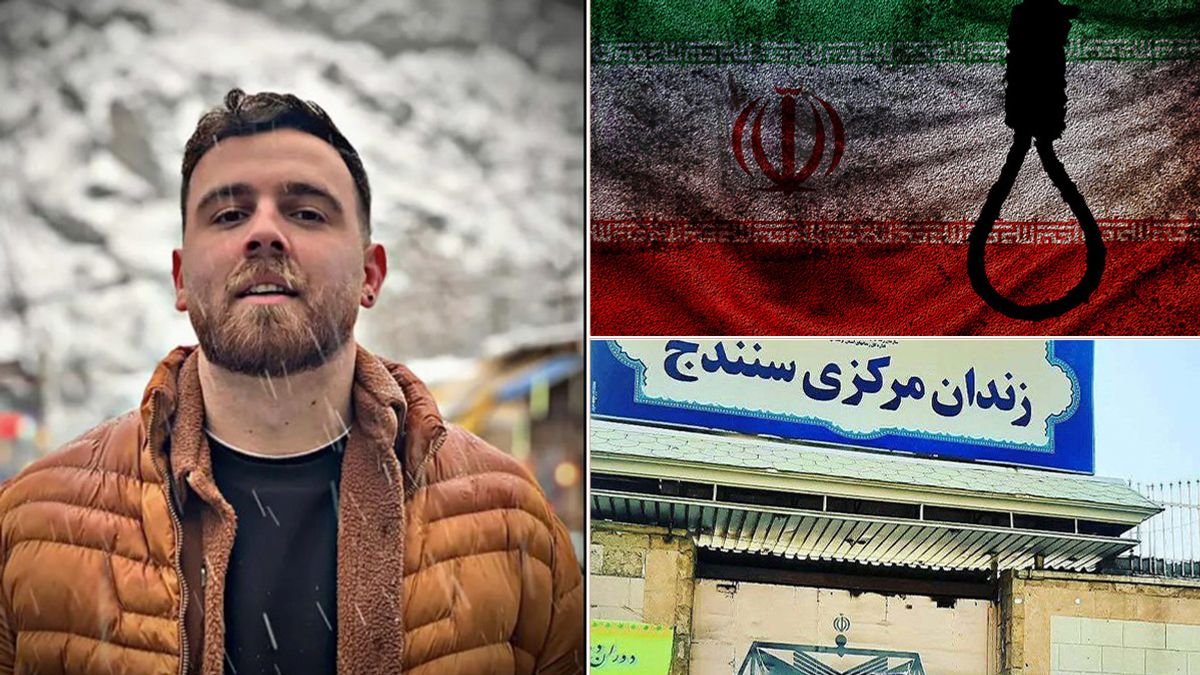

An Iranian protester is in a difficult situation as his scheduled execution was delayed at the last minute. Shopkeeper Erfan Sultani was set to be hanged on January 14 but, following an intervention from US President Trump, his death sentence has been postponed temporarily. However, the Iranian regime has warned of severe repercussions against “rioters” amidst ongoing anti-government protests in the country.
Internet access has been restricted in Iran to quell the protests, but human rights organizations and Sultani’s relatives have confirmed that his execution has been halted for now. The 26-year-old was arrested on January 8 and charged with moharebeh, a crime punishable by death under Iranian law, often used against those perceived as threats to the government.
Sultani’s case has gained global attention, with reports of a swift trial lasting only one hour, where he was denied legal representation, and his lawyer was blocked from accessing his case details. His family was given a mere 10 minutes to bid him farewell before his ‘final’ sentence.
The country has witnessed a wave of violent crackdowns on demonstrators, resulting in numerous casualties. Iran, along with China, has one of the highest rates of executions globally, with 1,922 death penalties carried out last year, doubling from the previous year. Human Rights Watch noted a significant increase in executions since the Woman Life Freedom uprising in 2023.
Amnesty International has criticized the unfair trials in Iran’s Revolutionary Court, where individuals are often charged with broad offenses like “corruption on earth.” The country employs various execution methods, including hanging, stoning (though less common due to international pressure), firing squad, beheading, and death by falling from a height.
Notorious prisons like Ghezel Hesar, Raja’i Shahr, and Sanandaj prison are known for their high rates of executions, often carried out publicly. The barbaric execution methods deliberately prolong the suffering of the victims.
Experts point out that Iran’s legal system is designed to inflict maximum psychological harm on detainees and their families, instilling fear to control the population. The suddenness of death sentences and the lack of control create a state of terror, affecting both the individual and their loved ones.