

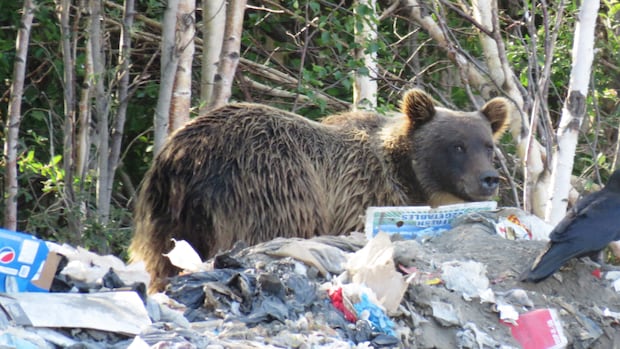

Inuvik is facing challenges with bears, and experts indicate that the only effective resolution may involve lethal measures.
In 2025, scientists from the N.W.T. Department of Environment and Climate Change recorded 3,936 instances of bear sightings using trail cameras, with as many as 13 bears captured in one image. Genetic testing revealed that over 40 bears frequently visited the landfill for food.
Since the installation of an electric fence around the dump, as reported by Cabin Radio, many of these bears have not survived.
While estimates differ, Toby Halle, a renewable resource officer in Inuvik, mentions that at least 28 bears have been killed by officers, with additional ones shot by residents. He noted that the chances of the few remaining bears making it are quite low.
“Their fate was pretty much predetermined, I guess,” Halle remarked.
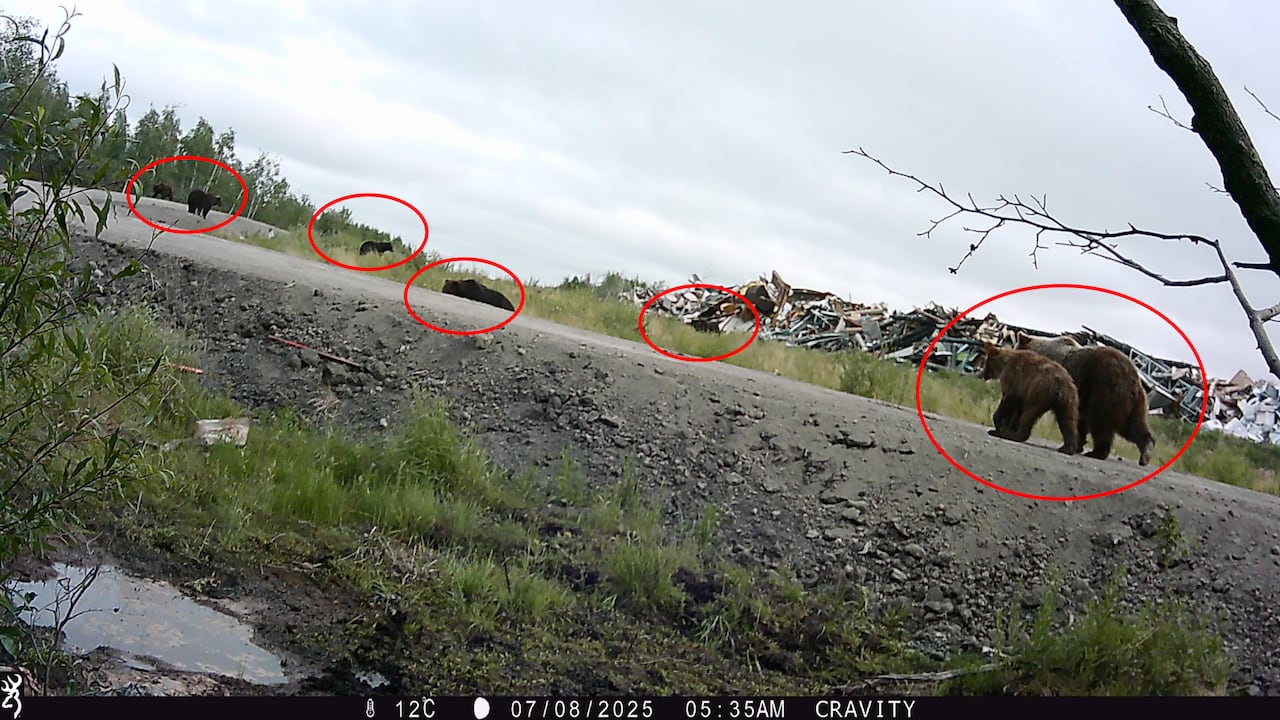
In 2025, researchers could spot multiple bears in one frame from trail cameras, sometimes as many as 13. (Government of the Northwest Territories)
Following directives from the Gwich’in Land and Water Board, authorities constructed an electric fence around the landfill to deter bears. This strategy is being adopted by other landfills across North America, but thus far, Inuvik stands as the only community in the Beaufort Delta region implementing it.
The town invested nearly a million dollars in this project, partially funded by federal resources, according to Inuvik Mayor Peter Clarkson.
“There was certainly a lot of anxiety in the community, with many people questioning the town’s decision. Isn’t it better to allow the bears to feed at the landfill long term?” Clarkson noted.
“No, that’s not a better option, as this is the situation that arises.”
The electricity was activated this summer, yet the issue persisted. Instead of resolving, bears began to invade Inuvik looking for food.
Others were observed wandering around the fence in desperation.
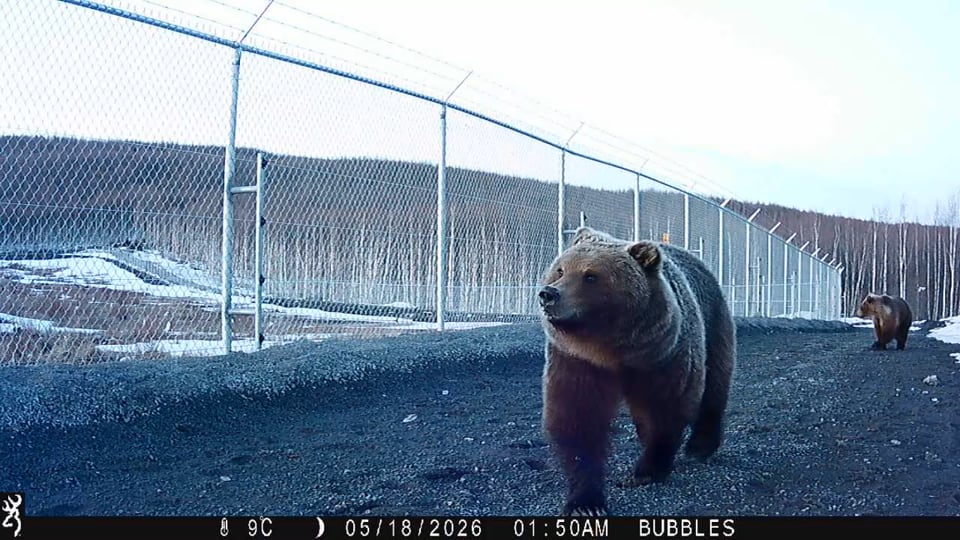
One of the grizzly bears captured by trail cameras prowling the Inuvik dump in May, 2026. (Government of the Northwest Territories)
“They would just circle the dump, appearing emaciated and sickly,” Halle described. “They seem lost and frankly, we’re uncertain about how to manage them.”
The challenge is that for many of these bears, the dump has been their only source of sustenance.
“We likely have seen three to four generations of bears that have utilized that landfill,” Clarkson explained, noting that female grizzlies typically start having cubs around the age of seven. “Regrettably, preventive measures weren’t taken 25 years ago.”
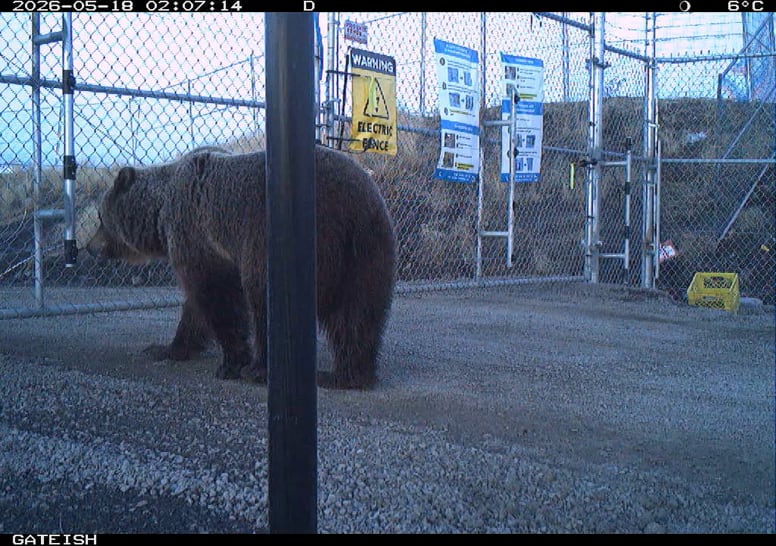
After the electric fence was switched on in April, many bears “didn’t know what to do with themselves,” say Toby Halle, renewable resource officer. (Government of the Northwest Territories)
Clarkson noted that fortunately, there were no serious bear incidents, but residents in Inuvik remained vigilant throughout the summer.
“We received a high volume of bear-related calls,” Halle stated.
He mentioned that in the past, the department attempted to relocate one family group, but they returned within a few days.
Dr. Lana Ciarniello, an independent conservation scientist and co-chair of the International Union for Conservation of Nature’s human-bear conflicts expert team, explained that relocating bears, especially in the N.W.T. where bear populations are robust, is not a practical solution.
“Where will you relocate them? You would be placing them in someone else’s territory,” she pointed out, adding that this raises the likelihood of one bear harming another.
“Relocating bears is not the answer.”
In Europe, where no-kill policies exist, some troublesome bears have been placed in captivity. However, she noted that many wild bears struggle to adjust to captivity, and Canada lacks sufficient specialized facilities to accommodate them.
Thus, the focus should be on prevention.
“Bears should not be foraging for garbage. It is 2026, and it is absurd to have open pits for waste anywhere in Canada. They need to be closed,” she emphasized.
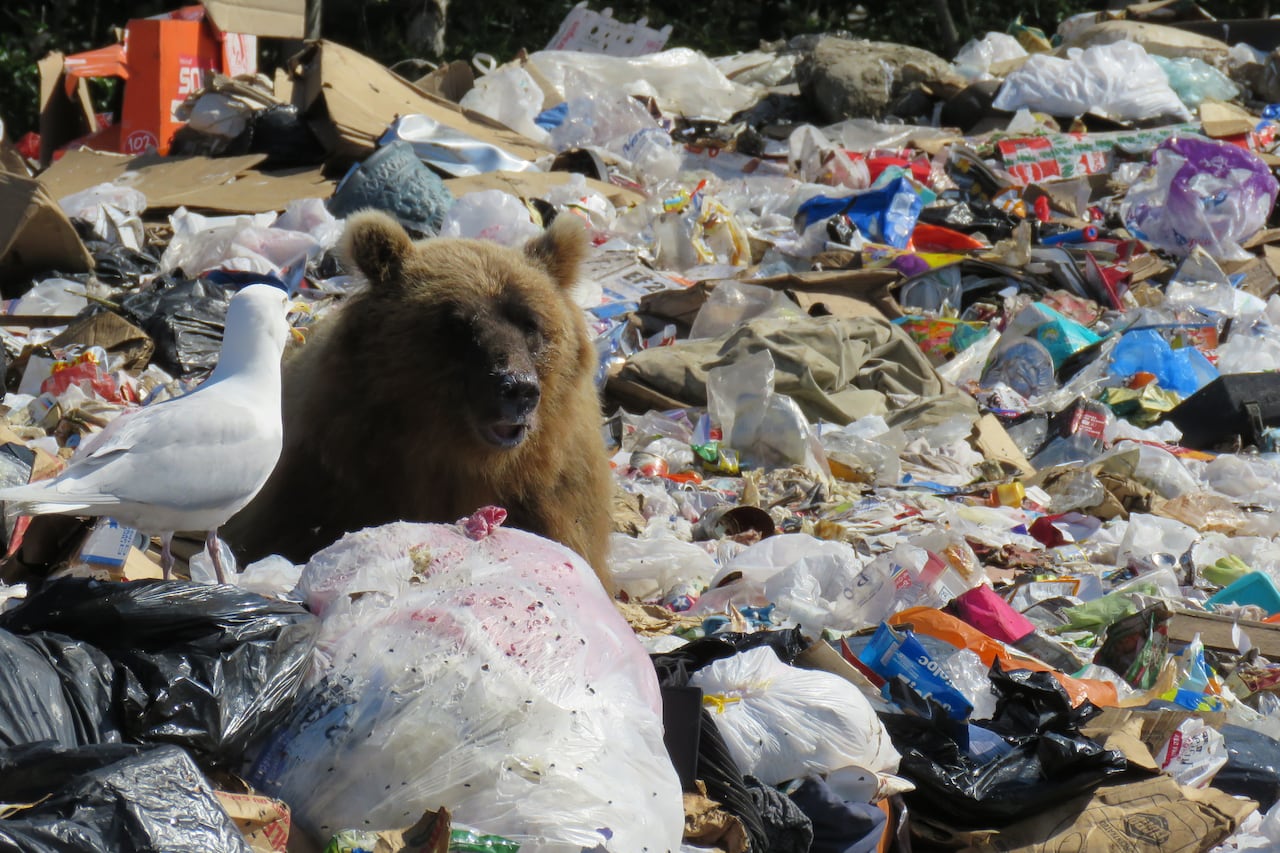
Many bears had grown up relying on the Inuvik landfill as a food source, like this one pictured in 2017. (Steven Baryluk/Government of the Northwest Territories)
Halle predicts that the next few years will see an increase in bear activity before it stabilizes.
That is, provided the fence remains intact and the town ensures it is bear-proof.
“We create these bears,” Ciarniello remarked. “They are not problematic by nature.”