

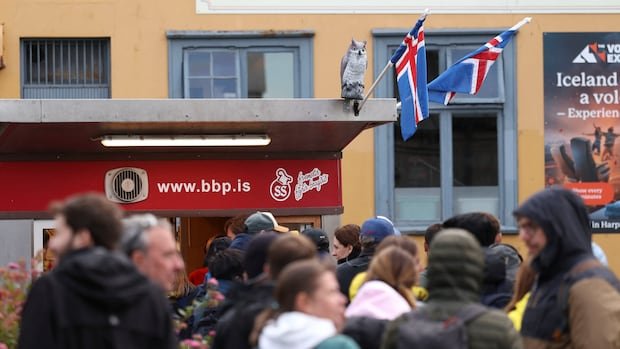

Icelanders have chosen to remain outside the European Union, as indicated by referendum results released on Sunday. They opposed the government’s efforts to initiate talks for EU membership, emphasizing the critical value of Iceland’s fishing waters.
The debate over EU accession in the Arctic island, home to 400,000 people, has persisted for more than ten years. Initially expected to lean towards opening membership negotiations, recent polls indicated a shift in public opinion.
During the referendum held on Saturday, 52.8% of votes were against the government’s proposal for talks with Brussels, while 47.2% were in favor. A significant voter turnout of 82.5% was reported, with only central Reykjavik constituencies showing majority support for membership discussions.
The government positioned EU membership as a defense against trade conflicts and Arctic tensions, presenting the referendum as a decisive moment. Prime Minister Kristrun Frostadottir stated that a “no” vote would likely put an end to the debate as long as her coalition remained in power.
In Brussels, optimism was expressed that Iceland’s potential EU entry could alleviate skepticism towards enlargement and enhance the bloc’s strategic position amidst Arctic security concerns. While being a NATO member without its own military, Iceland deliberated on whether EU affiliation could enhance its security, particularly in light of doubts raised by U.S. President Donald Trump regarding the alliance.
Fishing, a cornerstone of Iceland’s economy, emerged as a focal point for many, surpassing security considerations. The industry contributes significantly to the country’s GDP and export earnings.
The island nation initially sought EU membership in 2009 amid a financial crisis, discontinuing talks in 2013. Financial matters took center stage once more ahead of the recent referendum, with concerns about inflation and interest rates in Iceland.
Proponents of EU accession argued that joining the union and potentially adopting the euro could offer economic relief. Iceland’s high central bank interest rates, compared to the European Central Bank’s rates, were a key issue.
Opposition leader Gudrun Hafsteinsdottir, leading the “no” campaign, downplayed the economic benefits of EU membership, emphasizing the need for local solutions. Voters like Ragnhildur Skarphedinsdottir expressed confidence in Iceland’s independent management and voted against EU talks.
Under EU regulations, fishing quotas are determined based on historical patterns, suggesting that Iceland could maintain control over its waters. However, some officials doubted this assertion, raising concerns about potential compromises in the future.