

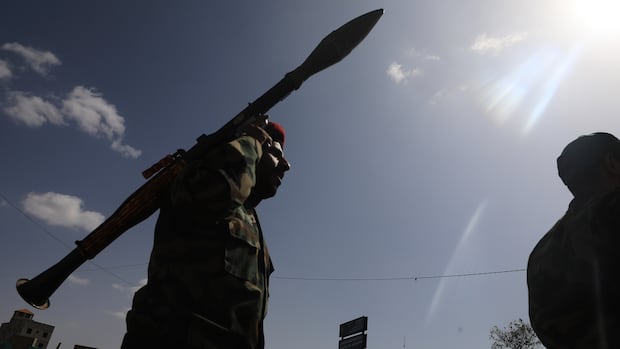

On Friday, two officials reported that Yemen’s Houthi rebels, supported by Iran, have seized a crucial island located at the southern entrance of the Red Sea. This development introduces a new phase in the ongoing conflict involving Iran and poses a greater risk to Saudi Arabia’s oil exports, especially after the kingdom had to shut down a major pipeline following an attack.
The Houthis have achieved their most significant territorial expansion in years around the Bab el-Mandeb Strait, which is a vital shipping route globally. This territorial acquisition could enhance Iran’s strategy of raising international oil and gas prices to exert pressure on the United States.
The Saudi government announced the closure of the pipeline after it was attacked the previous day, characterizing the action as “a precautionary measure,” according to the Saudi Ministry of Energy.
The Saudi Foreign Ministry attributed the assault to a series of drones launched from Iraq. They indicated through the state-run Saudi Press Agency that the kingdom would refrain from retaliation to allow the Iraqi government “an opportunity to implement necessary actions.” The Iraqi administration condemned the attack and initiated an investigation.
In July, Saudi Arabia and the United States conducted airstrikes on Iranian-backed militias in Iraq, citing their involvement in drone assaults on Saudi oil facilities, which had been claimed by the Houthis. Regional officials informed The Associated Press that the Houthis had assisted Iraqi militias in planning and executing these attacks.
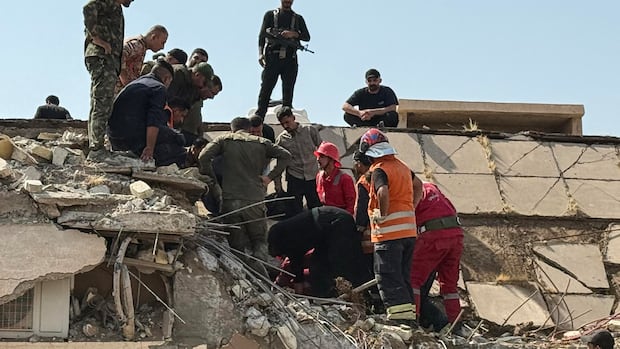
For the first time, Saudi Arabia has acknowledged it took part in a U.S. strike as part of the war with Iran. The U.S. says it struck weapons and logistics sites in Iraq that belong to groups Saudi Arabia says launched drone attacks on Saudi oil infrastructure.
The East-West pipeline, constructed in the 1980s, has been pivotal for Saudi Arabia’s oil exports, especially after disruptions in the Strait of Hormuz during the Iran war. By early June, the kingdom had increased its oil exports from the Red Sea port at the pipeline’s terminus to over five million barrels per day, as reported by the International Energy Agency.
The capture of Mayun, a small volcanic island in the strait also known as Perim, was confirmed by a senior military official from Yemen’s internationally recognized government and a Houthi official. Both requested anonymity due to lack of authorization to speak publicly.
Saudi Arabia, the largest oil exporter globally, has become increasingly dependent on the Red Sea for its crude oil transport as an alternative to the Strait of Hormuz, where Iran has targeted shipping vessels. The Houthi attempts to block the 28-kilometer-wide Bab el-Mandeb channel complicate this route.
In their statement on Friday, the Houthi armed forces claimed victories along the coast but did not mention the island, Mokha, or the Bab el-Mandeb Strait. They promised “escalation for escalation” in their conflict with Saudi Arabia, insisting that “maritime navigation is safe for all entities except Saudi vessels.”
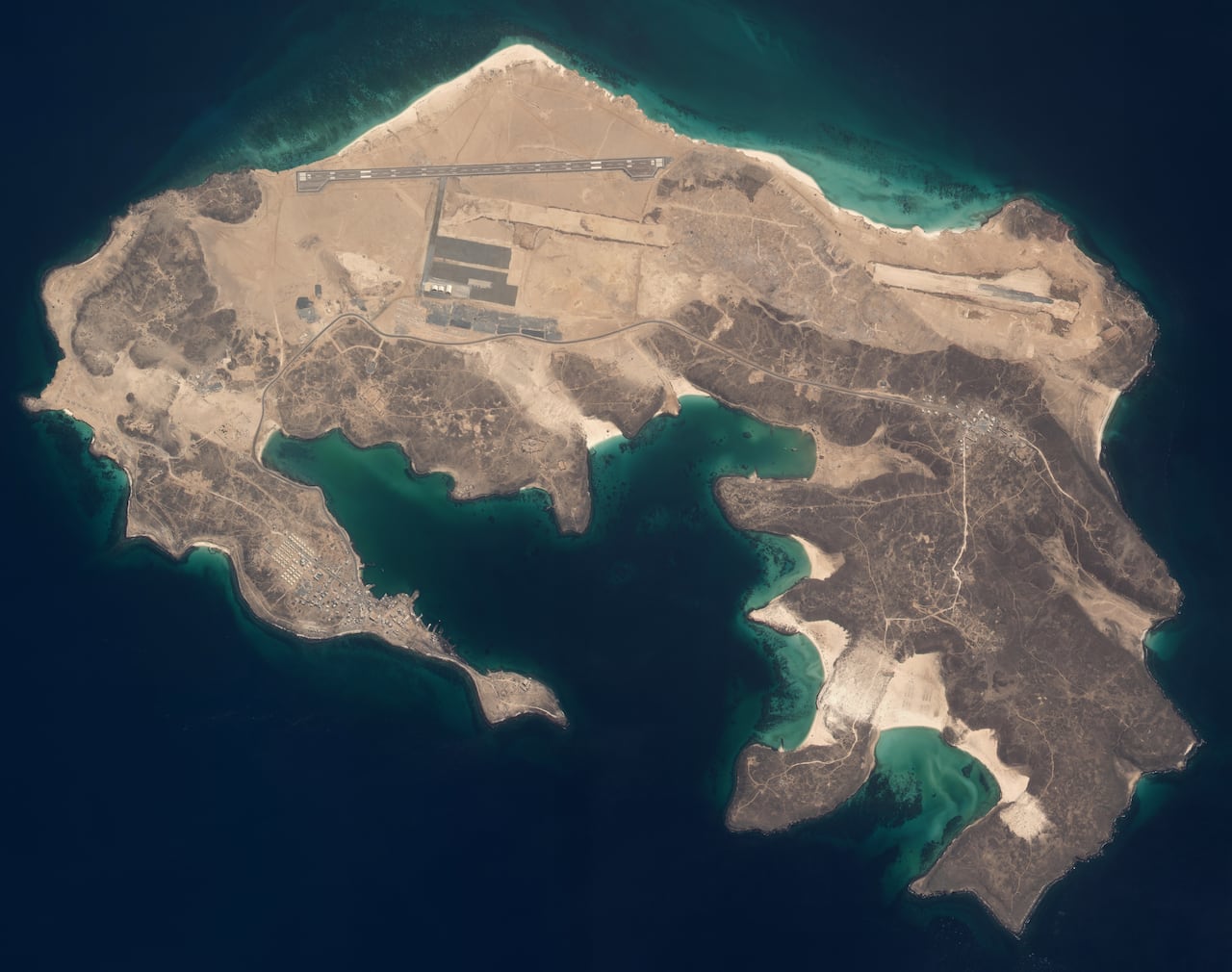
This satellite photo taken Friday shows Mayun island. (Pléiades Neo © Airbus DS 2026/The Associated Press)
Despite this, market conditions remain anxious, and analysts have described the Houthis as unpredictable. Crude oil prices surged above $100 US per barrel again this week, granting Tehran more leverage in any potential negotiations.
Since July, the Houthis have targeted Saudi maritime assets in the Red Sea and have also attacked oil infrastructure within Saudi Arabia. The rebels assert their actions are in retaliation for the prolonged blockade imposed by the kingdom on Houthi-controlled regions of Yemen.
After the Houthis captured Mokha on Thursday, Saudi Arabia launched strikes on the airport in that port city, according to a Houthi broadcaster. There have been no reports of casualties or damage.
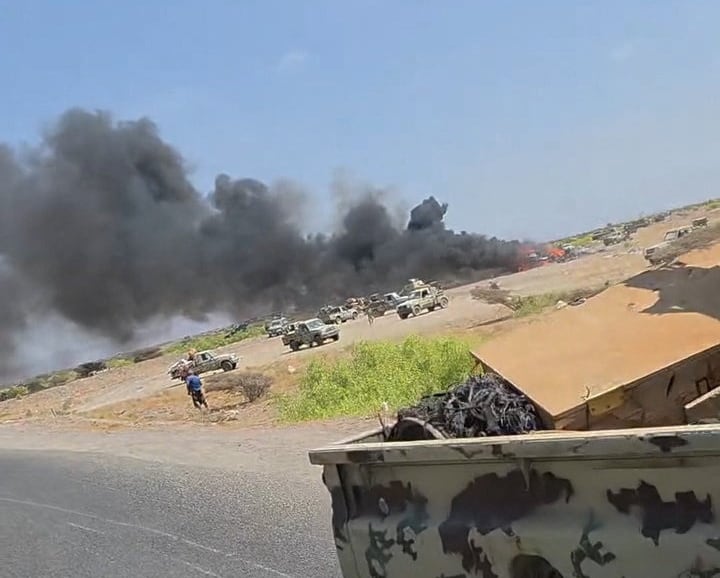
Smoke rises from what is said to be an explosion near Ras al-Arah, Yemen, in this screengrab from a social media video released on Friday. (Reuters)
A senior military figure from Yemen’s internationally recognized government expressed shock that the Saudi air force did not intervene to stop the capture of Mokha, located approximately 80 kilometers from the strait. He speculated that Saudi Arabia did not receive approval from the U.S. to initiate a large-scale air offensive.
This official, who requested anonymity due to media restrictions, also cited “lack of coordination” among Yemen’s military and various allied militias, which provided the Houthis with “an invaluable opportunity.”
Shipping traffic through the Bab al-Mandeb Strait has plummeted by around 60 percent since the Houthis began their attacks on vessels there in late 2023 while expressing solidarity with Palestinians in Gaza. Although shipping activity increased this year as Saudi Arabia sought alternatives to the Strait of Hormuz, renewed threats from the Houthis have “restricted” such operations, according to Lloyd’s List Intelligence.
This situation has compelled Saudi Arabia to seek additional alternatives, routing its oil north via the Red Sea to the Mediterranean through either the Suez Canal or a pipeline across Egypt — a significantly longer journey for its Asian customers. The Houthis have also threatened this route, attacking a Saudi vessel in the northern Red Sea in late August.
Earlier on Friday, the Iranian government urged an end to Saudi Arabia’s blockade of Houthi-controlled regions as a show of support for its ally. The Iranian Foreign Ministry also advocated for a resumption of discussions between Saudi Arabia and the Houthis.
In a clear signal of the Houthis’ significance to Tehran, the spokesperson for Iran’s influential Revolutionary Guard on Wednesday stated that any negotiated resolution with the U.S. should include Yemen, marking the first direct mention of that front.
Saudi Arabia, asserting its long-standing offer for “opportunities for negotiation,” also affirmed its right to defend itself. The foreign ministers of Iran and Saudi Arabia discussed diplomatic measures to “restore stability” in a conversation on Thursday, as reported by Iranian Foreign Minister Abbas Araghchi via social media.
‘People are scared’
As the Houthis advanced along the Red Sea coastline towards the Bab el-Mandeb channel, Yemen’s Saudi-aligned government sought international assistance.
In a statement released on Friday following a meeting the day before, the National Defense Council emphasized its role in safeguarding navigation freedom and condemned the renewed Houthi assaults on Saudi Arabia.
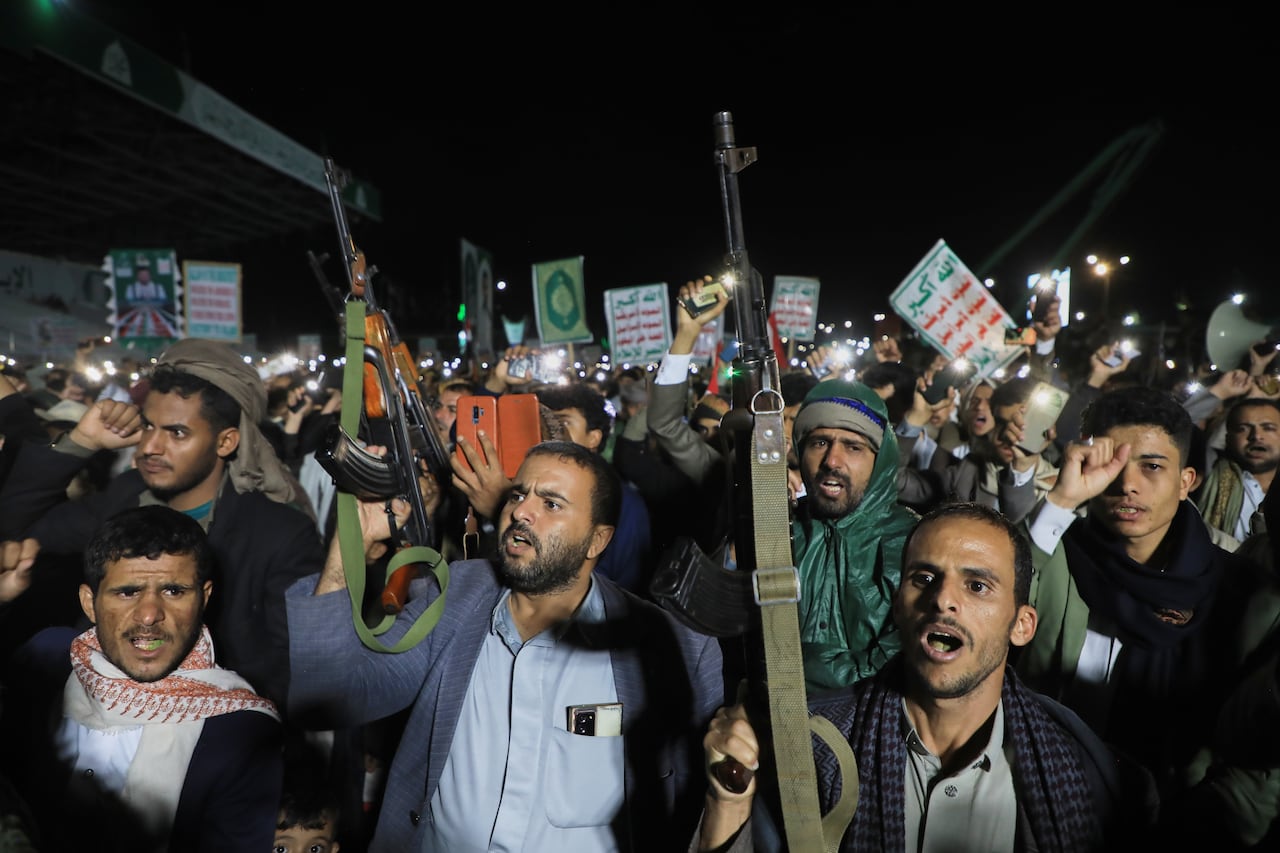
Houthi supporters rally in rebel-controlled Sanaa on Friday. (Osamah Abdulrahman/The Associated Press)
The intensifying conflict jeopardizes a fragile ceasefire that had largely halted Yemen’s civil war since 2022. This turmoil affects 40 million individuals in the Arab world’s least prosperous nation. The violence has claimed 150,000 lives and driven many others to the brink of starvation.
Recent escalations in fighting have caused over 46,000 individuals to flee, as reported by the U.N. migration agency on Friday.
Those escaping took with them “whatever they could carry,” according to Abdusattor Esoev, mission chief for the International Organization for Migration in Yemen. He noted that the number of displaced individuals more than doubled this week and could continue to rise dramatically.
“You can see the fear in their eyes, and people are frightened,” Esoev remarked.
Among those fleeing were doctors and medical personnel. Lou Cormack, the Yemen co-ordinator for Doctors Without Borders, stated on Friday that the organization has prioritized keeping the hospital in Mokha operational after most of its staff evacuated.
The Houthis have been engaged in conflict with Yemen’s government since 2014, when they took control of a significant portion of northern and central Yemen, including the capital, Sanaa. Saudi Arabia intervened in the conflict the following year in support of the government.