

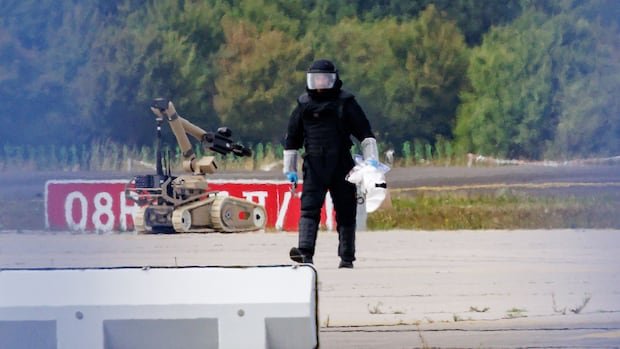

Germany has accused Russia of being behind an attempted drone attack at Leipzig/Halle Airport last month, leading to the discovery of a drone carrying explosives near a Ukrainian plane on Aug. 4. German authorities dismantled the device, emphasizing the heightened danger posed by the incident.
Western officials have widely criticized Moscow for engaging in a campaign of sabotage and disruption across Europe, aimed at undermining support for Ukraine and destabilizing European nations. German Interior Minister Alexander Dobrindt pointed out that the drone used in the attempted attack exhibited similarities to other Russian operations in Ukraine, indicating a level of technical expertise and meticulous planning.
While Dobrindt highlighted the involvement of individuals acting on behalf of Russian state entities, Foreign Minister Johann Wadephul condemned the attack, leading to the decision to close the Russian consulate in Bonn and the Russian House cultural center in Berlin.
Germany plans to intensify its response by proposing additional Russian individuals for inclusion on EU sanctions lists related to hybrid attacks, enhancing entry controls for Russian nationals, and increasing pressure on suspected tankers transporting Russian oil in violation of sanctions. The Russian ambassador was summoned to the Foreign Ministry in Berlin.
In response, Russian Foreign Ministry spokesperson Maria Zakharova vowed a corresponding reaction to the closures, denying Russian involvement in the drone attack and dismissing the claims as a fabricated pretext. Russian President Vladimir Putin refuted the allegations, alleging that Germany sought to divert attention from domestic issues by blaming Russia without providing substantial evidence.
Leipzig/Halle Airport serves as a vital logistics hub supporting Ukraine, hosting Ukrainian aircraft and NATO’s Strategic Airlift International Solution operations. Previous incidents at the airport, including a 2024 arson attack suspected to be orchestrated by Russian intelligence, highlight ongoing tensions.
Overall, the European Union has imposed numerous sanctions on Russia following the Ukraine conflict, with NATO and international allies expressing solidarity with Germany in the aftermath of the Leipzig attack. The incident underscores escalating concerns of Russian aggression and the need for coordinated responses to safeguard regional security.
The German government recently approved expanded powers for intelligence services to counter cyber threats and sabotage, reinforcing efforts against potential attacks. Polish Prime Minister Donald Tusk echoed similar concerns about Russian sabotage activities, citing recent incidents targeting Poland, including a fire at a prominent drone manufacturer’s facility. Investigations into these incidents are ongoing, with suspicions of foreign intelligence involvement.