


Leading up to the unveiling of a new Churchill Falls agreement, there were concerns about the impact of potential leadership changes in Quebec. However, a political expert has indicated that the involvement of the federal government will make it challenging to undo the deal.
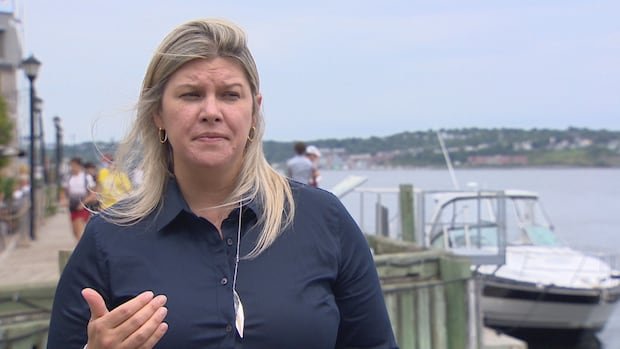
Describing it as a significant investment in renewable energy, Dalhousie University’s political science professor, Lori Turnbull, emphasized that with the federal government participating not just as mediators but also as investors, the deal extends beyond Newfoundland and Labrador and Quebec.
The Parti Québécois (PQ) is currently leading in opinion polls, previously expressing opposition to the Churchill Falls agreement. Despite this, following the agreement’s release, there seems to be a shift in stance. During the announcement, Quebec Premier Christine Fréchette was asked about the agreement’s future under a PQ government, with her acknowledging the party’s inclination to reconsider the deal.
In response, PQ Leader Paul St-Pierre Plamondon dismissed Fréchette’s statement as false, accusing her of rushing the deal for electoral purposes. He mentioned that the PQ would be open to maintaining the agreement if it benefits Quebec.
Turnbull highlighted that even if the PQ sought to annul the agreement, the federal government would likely intervene to prevent such a scenario, emphasizing that the deal’s political jeopardy is overstated.
Joël-Denis Bellavance, a journalist at La Presse covering Churchill Falls, noted that many experts view the agreement as beneficial for Quebec, describing it as a win-win situation. He stressed that the current deal is unmatched and emphasized its critical importance to Quebec’s energy production.
Bellavance also connected the agreement to Prime Minister Mark Carney’s ambition to position Canada as an energy superpower, particularly considering the potential impact of impending U.S. tariffs. He suggested that Quebec and Newfoundland could provide clean energy to U.S. states, potentially influencing negotiations with President Trump.
Regarding the influence of the federal government on the PQ’s decisions, Bellavance suggested that Hydro-Québec, having a significant role, would convince the Parti Québécois of the deal’s superiority, making it unlikely for them to reject the signed agreement.