

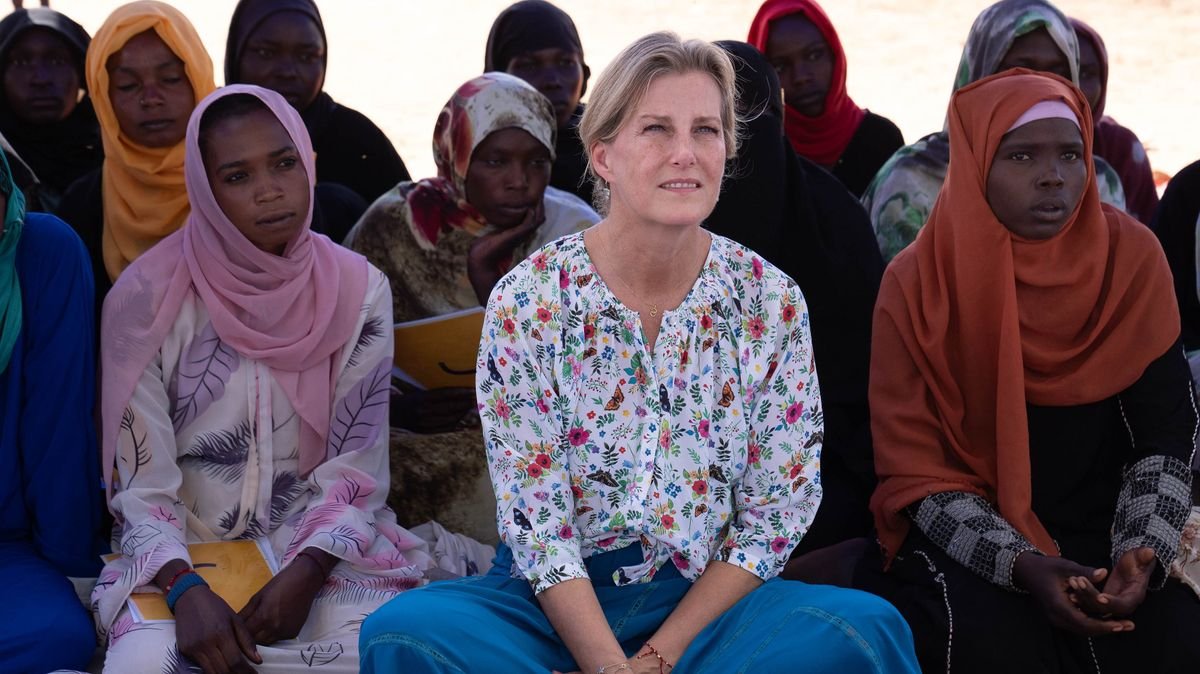

The Duchess of Edinburgh emphasized the crucial role of women in rebuilding and maintaining peace in conflict-ridden areas devastated by war. Reflecting on the 1,000 days of the brutal civil war in Sudan, she expressed her optimism for the future of generations impacted by the ongoing conflict.
Having visited the Chad-Sudan border to witness the conflict’s effects firsthand and interacted with young women and girls supported by Plan International UK, the Duchess stressed the urgent need for assistance for the affected population. She highlighted the lack of global attention to the severe humanitarian crisis unfolding in Sudan.
The conflict has led to the breakdown of livelihoods and essential services, with a significant percentage of hospitals and health facilities rendered non-operational, leaving a large portion of the population without access to healthcare. Sudan is facing the world’s largest food crisis, with millions of people experiencing acute food insecurity.
During her visit to Adré transit camp, the Duchess heard harrowing stories of loss and resilience from individuals affected by the conflict. Despite the grim circumstances, she witnessed the remarkable strength and leadership of women in caring for children and supporting their communities during crisis situations.
The Duchess, as a senior member of the royal family, has been dedicated to raising awareness about the impact of conflict, particularly gender-based violence, on communities worldwide. She emphasized the need to end the devastating conflict in Sudan to save lives and enable affected families to rebuild their futures in safety.
Various aid agencies have joined forces to urge the UK government to take action to prevent further catastrophe in Sudan. Organizations are working tirelessly to provide humanitarian assistance, but funding cuts and limited access pose significant challenges in addressing the crisis effectively.
The situation in Sudan remains dire, with families struggling to access basic necessities like food and shelter. Plan International and other organizations are advocating for increased humanitarian funding and unrestricted access to deliver aid across all regions of Sudan to save lives, particularly those of vulnerable children.
By prioritizing the voices and needs of those affected by the conflict and supporting local responders, there is hope for a more sustainable recovery in Sudan. The international community’s collective efforts are crucial in ensuring that humanitarian aid reaches all parts of the country to alleviate the suffering of thousands impacted by the crisis.