

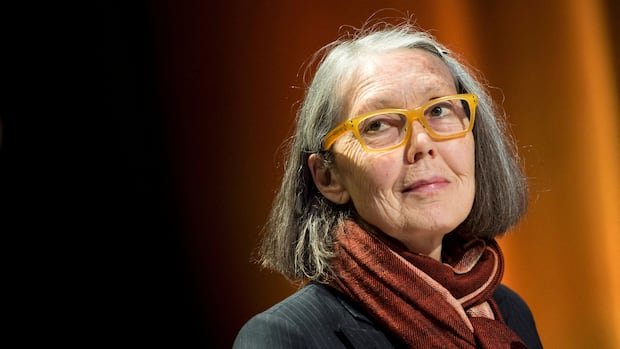

The Swedish Academy in Stockholm awarded the Nobel Prize in Literature to Canadian poet and essayist Anne Carson, recognizing her innovative contributions to contemporary literature by engaging with classical traditions. Carson, 76, who holds Icelandic and Canadian citizenship and divides her time between Iceland and Ann Arbor, Michigan, was surprised to learn about her win while in Reykjavik, Iceland. Congratulations poured in from various quarters, including Canada’s prime minister, praising Carson for reimagining ancient stories and reshaping literary perspectives.
Carson, an alumna of the University of Toronto, where she attained her bachelor’s, master’s, and PhD in classics, went on to teach at esteemed institutions like Princeton, McGill, Stanford, and New York universities. Her profound impact on her students, like poet Jin Jin Xu, reflects her transformative influence on their writing styles and perspectives.
Born in Toronto, Carson’s literary prowess in reinterpreting ancient Greek and Latin texts has garnered her numerous accolades, including the prestigious Governor General Award for her poetry collection “Norma Jeane Baker of Troy.” Her multifaceted career spans poetry, essays, translations, and opera adaptations, showcasing her unique blend of classical inspiration with contemporary creativity.
Carson’s notable works, such as “Glass, Irony and God” and “Autobiography of Red: A Novel in Verse,” have pushed genre boundaries and earned critical acclaim. Despite facing health challenges, including a Parkinson’s disease diagnosis, Carson’s unwavering dedication to her craft continues to inspire admiration from literary luminaries like Joyce Carol Oates.
As the third Canadian-born Nobel Prize winner in Literature, Anne Carson joins the ranks of esteemed laureates in the literary world. The Nobel prizes, awarded annually on December 10th, honor individuals who have made significant contributions to humanity, with recipients receiving a prize amount of 12 million Swedish crowns (approximately $1.7 million CAD).
The Nobel Prize committee’s recognition of Carson’s exceptional talents underscores her enduring legacy as a visionary writer who has reshaped the boundaries of literature through her unparalleled imagination and creativity.