

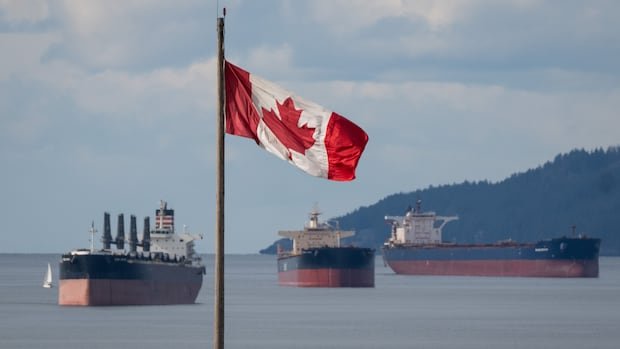

Canadian exports to China surged by 30% in the initial half of 2026, with total trade increasing by 3.6% compared to the previous year, as per data from Statistics Canada analyzed by experts. The findings, part of a recent report released by the Canada China Business Council and the University of Alberta’s China Institute, seem to mirror the renewed interactions between the two nations, which form part of Canada’s efforts to broaden its economic scope amidst strained relations with the U.S.
The total trade in goods between Canada and China amounted to $66.6 billion in the first half of 2026, marking a 3.6% rise, while exports saw a substantial 30% growth to $21.74 billion year-on-year. The major players were energy and minerals, accounting for 58.4% of all domestic exports to China during that period, notably with energy (primarily crude oil and liquefied propane) alone experiencing an 81.8% surge. Additionally, exports of metal ores and non-metallic minerals, including copper ore, escalated by 29%.
“This marks a record for our first-half exports to China,” stated Bijan Ahmadi, the executive director of the Canada China Business Council. Despite enduring trade relations between the two nations, the recent upsurge is likely the outcome of various factors aligning together.
Geopolitical dynamics and the aftermath of the Trump era have played a significant role in the warming relations between Canada and China, following years of tensions sparked by the arrest of Huawei executive Meng Wanzhou on a U.S. extradition warrant in 2018. Concurrently, with the ongoing trade escalations between Canada and the U.S., Canadian Prime Minister Mark Carney has emphasized the country’s intent to establish new trade partnerships and reduce its dependency on the U.S.
The Trans Mountain Pipeline reaching 97% capacity in June has notably bolstered Asia’s access to Western Canadian crude oil. This, combined with disruptions in oil shipments due to the U.S.-Israeli conflict with Iran, leading to higher oil prices, has prompted customers to turn towards Canadian producers.
Notably, Mark Maki, CEO of Trans Mountain, projects that by 2028, Asia could potentially account for 70% of Canada’s oil exports, signifying a significant shift in trade patterns. The trade truce between Canada and China has further paved the way for mutual agreements, such as allowing Chinese electric vehicles into the Canadian market in exchange for tariff suspensions on Canadian agricultural products.
While exports to China have seen a remarkable increase, imports have experienced a decline of 5.8% year-on-year, although China remains Canada’s second-largest import source. This shift in imports is partly influenced by the relocation of certain manufacturing operations outside of China, redirecting trade towards countries like Vietnam.
Despite the overall positive trend in trade, the report highlights that the agricultural sector’s performance saw only modest growth, with mixed outcomes in various commodities. Looking ahead, there is a call to diversify trade partners and fortify engagements in the Asia-Pacific region, given the substantial market opportunities it presents, particularly in China. The upcoming year-end figures are anticipated to provide a comprehensive overview, with early indications suggesting that Canada is well-positioned to surpass its export targets to China by 2030.