

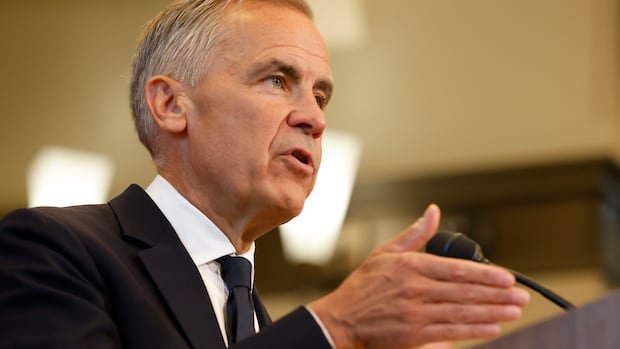

Prime Minister Mark Carney instructed his negotiating team to walk away from discussions following the late introduction of unacceptable demands by the Trump administration related to culture, autos, and sovereignty. Carney expressed that the U.S. lacked interest in establishing a genuine economic partnership with Canada, highlighting discrepancies in their negotiation approaches.
In a departure from his usual diplomatic tone, Carney criticized the U.S. for its trade deal flexibility, contrasting it with the united front presented by Canada’s government. He emphasized that the U.S. demands were excessive and the offers insufficient, leading to the breakdown of negotiations in Ottawa.
Among the contentious issues, Carney disclosed U.S. objections to Canada’s support for French culture subsidies, the presence of French-language media online, and the requirement for bilingual product labeling in Canada. He firmly stated that these demands were never up for consideration by Canada and were deemed unacceptable by the Canadian populace.
Regarding the auto industry, Carney highlighted U.S. requests that unfairly targeted Canadian-made parts and proposed exemptions for specific vehicles from tariffs without justification. These demands, if accepted, would have negatively impacted Canada’s vehicle production economics over time, Carney explained.
Ontario Premier Doug Ford supported Carney’s decision to halt negotiations, asserting that Canada, being united and ready for a trade conflict, would prevail in any trade war with the U.S. Ford criticized the proposed deal as detrimental to Ontario’s interests, particularly affecting the auto, steel, and manufacturing sectors.
Carney further elaborated that the U.S. sought to introduce measures undermining Canada’s sovereignty, particularly by restricting its ability to engage in other trade agreements globally. He denounced these attempts as unacceptable, emphasizing Canada’s commitment to free trade and its reputation as a preferred trading partner worldwide.
The breakdown in negotiations was attributed to the last-minute insertion of additional demands by the U.S., derailing months of progress towards a mutually beneficial agreement. Carney announced retaliatory tariffs on U.S. goods matching those imposed by the U.S., effective shortly after Labor Day.
In response to questions regarding the U.S.’s trustworthiness in negotiations, Carney criticized the lack of unity within the U.S. administration compared to Canada’s cohesive approach. He underscored Canada’s awareness of the U.S.’s evolving trade tactics, emphasizing the need to protect Canadian interests and industries against unfair tariffs.
Conservative Leader Pierre Poilievre expressed disappointment over the U.S.’s tariff imposition on Canada, pledging support for measures to safeguard Canadian industries. Poilievre called for continued efforts towards tariff-free trade and expressed readiness to collaborate with Carney to protect Canadian workers and businesses.
Economist Trevor Tombe warned of the potential job impacts from the tariffs, estimating significant job losses across Canada if the tariffs remain in effect. The federal government projected job losses and economic impacts due to the tariffs, prompting Carney to assure support for affected businesses beyond the current administration’s tenure.